<body><!-- --><div id="b-navbar"><a href="http://www.blogger.com/" id="b-logo" title="Go to Blogger.com"><img src="http://www.blogger.com/img/navbar/1/logobar.gif" alt="Blogger" width="80" height="24" /></a><form id="b-search" name="b-search" action="http://search.blogger.com/"><div id="b-more"><a href="http://www.blogger.com/" id="b-getorpost"><img src="http://www.blogger.com/img/navbar/1/btn_getblog.gif" alt="Get your own blog" width="112" height="15" /></a><a href="http://www.blogger.com/redirect/next_blog.pyra?navBar=true" id="b-next"><img src="http://www.blogger.com/img/navbar/1/btn_nextblog.gif" alt="Next blog" width="72" height="15" /></a></div><div id="b-this"><input type="text" id="b-query" name="as_q" /><input type="hidden" name="ie" value="UTF-8" /><input type="hidden" name="ui" value="blg" /><input type="hidden" name="bl_url" value="infopedia.infomaninc.com" /><input type="image" src="http://www.blogger.com/img/navbar/1/btn_search_this.gif" alt="Search This Blog" id="b-searchbtn" title="Search this blog with Google Blog Search" onclick="document.forms['b-search'].bl_url.value='infopedia.infomaninc.com'" /><input type="image" src="http://www.blogger.com/img/navbar/1/btn_search_all.gif" alt="Search All Blogs" value="Search" id="b-searchallbtn" title="Search all blogs with Google Blog Search" onclick="document.forms['b-search'].bl_url.value=''" /><a href="javascript:BlogThis();" id="b-blogthis">BlogThis!</a></div></form></div><script type="text/javascript"><!-- function BlogThis() {Q='';x=document;y=window;if(x.selection) {Q=x.selection.createRange().text;} else if (y.getSelection) { Q=y.getSelection();} else if (x.getSelection) { Q=x.getSelection();}popw = y.open('http://www.blogger.com/blog_this.pyra?t=' + escape(Q) + '&u=' + escape(location.href) + '&n=' + escape(document.title),'bloggerForm','scrollbars=no,width=475,height=300,top=175,left=75,status=yes,resizable=yes');void(0);} function blogspotInit() {} --></script><script type="text/javascript"> blogspotInit();</script><div id="space-for-ie"></div>

Friday, November 11, 2005

BaBar experiment

In the field of particle physics BaBar is an international collaboration of more than 550 physicists and engineers investigating CP-violation effects using the BaBar particle detector at the Stanford Linear Accelerator, Stanford, CA, USA. If the CP symmetry holds, the decay rate of B meson particles and their anti-particles should be equal. Analysis of the BaBar results showed this was not the case—in the summer of 2002, definitive results were published based on the analysis of 87 million B/B-bar meson-pair events, clearly showing the decay rates were not equal. Consistent results were also gathered in the BELLE experiment at the KEK laboratory in Japan.

CP-violation was already predicted by the Standard Model of physics but the BaBar detector has increased the accuracy to which this effect has been experimentally measured. Currently results are in agreement with the standard model, but further investigation of a greater variety of decay modes may reveal discrepancies in the future.

The BaBar detector is a multi-layer particle detector. Its large solid angle coverage, vertex location with precision on the order of tens of micrometres (provided by a silicon vertex detector), good pion-kaon separation at multi-GeV momenta (provided by a novel Cherenkov detector), and few-percent precision electromagnetic calorimetry (CsI(Tl) scintillating crystals) allow a list of other scientific searches apart from CP violation in the B system. Studies of rare decays and searches for exotic particles and precision measurements of bottom and charm mesons and tau leptons are possible.

BaBar experiment

In the field of particle physics BaBar is an international collaboration of more than 550 physicists and engineers investigating CP-violation effects using the BaBar particle detector at the Stanford Linear Accelerator, Stanford, CA, USA. If the CP symmetry holds, the decay rate of B meson particles and their anti-particles should be equal. Analysis of the BaBar results showed this was not the case—in the summer of 2002, definitive results were published based on the analysis of 87 million B/B-bar meson-pair events, clearly showing the decay rates were not equal. Consistent results were also gathered in the BELLE experiment at the KEK laboratory in Japan.

CP-violation was already predicted by the Standard Model of physics but the BaBar detector has increased the accuracy to which this effect has been experimentally measured. Currently results are in agreement with the standard model, but further investigation of a greater variety of decay modes may reveal discrepancies in the future.

The BaBar detector is a multi-layer particle detector. Its large solid angle coverage, vertex location with precision on the order of tens of micrometres (provided by a silicon vertex detector), good pion-kaon separation at multi-GeV momenta (provided by a novel Cherenkov detector), and few-percent precision electromagnetic calorimetry (CsI(Tl) scintillating crystals) allow a list of other scientific searches apart from CP violation in the B system. Studies of rare decays and searches for exotic particles and precision measurements of bottom and charm mesons and tau leptons are possible.

BaBar experiment

In the field of particle physics BaBar is an international collaboration of more than 550 physicists and engineers investigating CP-violation effects using the BaBar particle detector at the Stanford Linear Accelerator, Stanford, CA, USA. If the CP symmetry holds, the decay rate of B meson particles and their anti-particles should be equal. Analysis of the BaBar results showed this was not the case—in the summer of 2002, definitive results were published based on the analysis of 87 million B/B-bar meson-pair events, clearly showing the decay rates were not equal. Consistent results were also gathered in the BELLE experiment at the KEK laboratory in Japan.

CP-violation was already predicted by the Standard Model of physics but the BaBar detector has increased the accuracy to which this effect has been experimentally measured. Currently results are in agreement with the standard model, but further investigation of a greater variety of decay modes may reveal discrepancies in the future.

Notable Events
The BaBar detector is a multi-layer particle detector. Its large solid angle coverage, vertex location with precision on the order of tens of micrometres (provided by a silicon vertex detector), good pion-kaon separation at multi-GeV momenta (provided by a novel Cherenkov detector), and few-percent precision electromagnetic calorimetry (CsI(Tl) scintillating crystals) allow a list of other scientific searches apart from CP violation in the B system. Studies of rare decays and searches for exotic particles and precision measurements of bottom and charm mesons and tau leptons are possible.

Thursday, November 10, 2005

Aachen Flugzeugbau

Aachen Flugzeugbau was a German aircraft manufacturer of the early 20th century, established around the time of World War I. With the end of the war, and the prohibition on powered flight in Germany, the firm began to specialise in sailplane construction, and in 1921 became known as Aachener Segelflugzeugbau, producing designs by Wolfgang Klemperer. It was purchased by Junkers in 1923.

Aachen Cathedral

The Aachen Cathedral, frequently referred to as the "Imperial Cathedral" (in German: Kaiserdom) of Aachen, is the oldest cathedral in northern Europe. Charlemagne began the construction of the Palace Chapel in 786. When he died in 814, he was buried in his own cathedral, and his bones are still preserved in a special shrine.

The cathedral obtained its present shape in the course of more than a millennium. The core of the Aachen cathedral is the Palace Chapel; being surprisingly small in comparison to the later additions, at the time of its construction it was the largest dome north of the Alps. Its fascinating architecture with Classical, Byzantine and Germanic-Franconian elements is the essence of a monumental building of great importance: for 600 years, from 936 to 1531, the Aachen cathedral was the church of coronation for 30 kings of the Holy Roman Empire.


In order to bear the enormous flow of pilgrims in the Gothic period a choir hall was built: a two-part Capella vitrea (glass chapel) which was consecrated on the 600th anniversary of Charlemagne's death.

Ever since, the magnificent architecture of the "glass house" of Aachen has never stopped being admired. In 1978, it was one of the first 12 items to make the entry into the UNESCO list of world heritage sites, as the first German and one of the first three European historical ensembles.

The Aachen cathedral treasury displays sacral masterpieces of the late Classical, Carolingian, Ottonian and Staufian period - among them there are some unique exhibits like the "Cross of Lothair" the "Bust of Charlemagne" and the "Persephone sarcophagus". The Cathedral Treasury in Aachen is regarded as one of the most important ecclesiastical treasuries in northern Europe.


In 1000, Otto III had Charlemagne's vault opened. It is said that the body was found in a remarkable state of preservation, seated on a marble throne, dressed in his imperial robes, with his crown on his head, the Gospels lying open in his lap, and his sceptre in his hand. A large picture representing Otto and his nobles gazing on the dead Emperor was painted on the wall of the great room in the Town Hall.

In 1165, Emperor Frederick Barbarossa again opened the vault and placed the remains in a sculptured sarcophagus made of Parian marble, said to have been the one in which Augustus Caesar was buried. The bones lay in this until 1215, when Frederick II had them put in a casket of gold and silver.

Aachen (district)

The district of Aachen (Kreis Aachen) is a Kreis (district) in the west of North Rhine-Westphalia, Germany. Neighboring districts are Heinsberg, Düren, Euskirchen, district-free Aachen (the city, giving the surrounding district the name, but is not part of the district), and also the province Limburg (Netherlands) and the Liège province (Belgium).

History;

The district as known today was created in 1975 in the reorganization of the districts of North Rhine-Westphalia, by merging the former districts of Aachen and Monschau, and some parts of the districts of Düren, Jülich and Schleiden as well as the Selfkant district, while a part of the former district was incorporated to the district-free city of Aachen.

The Landkreis Aachen was formed in 1816 from the two French cantons Burtscheid and Eschweiler, with its capital set to the city of Burtscheid. In 1897 Burtscheid was incorporated into the city of Aachen, but the administrative seat stayed there, even though the capital was no longer part of the district.

Geography;

Geographically the district covers a part of the Eifel mountains in the south, but also the lowlands of the Niederrheinische Bucht.

Coat of arms

The top of the coat of arms shows the black lion, the sign of Jülich, as the district contains mostly former parts of the duchy of Jülich. In the bottom the swan on a deer antler is the sign of the city of Burtscheid, which was the capital of the district till it was incorporated into the city of Aachen.


Towns and municipalities

Towns;
  • Alsdorf
  • Baesweiler
  • Eschweiler
  • Herzogenrath
  • Monschau
  • Stolberg
  • Würselen
Municipalities;
  • Roetgen
  • Simmerath

Aachen

Aachen (French Aix-la-Chapelle, Dutch Aken, Latin Aquisgranum, Ripuarian Oche) is a spa city in North Rhine-Westphalia, Germany, on the border with Belgium and the Netherlands, 65 km to the west of Cologne, and the westernmost city in Germany, at 50°46′ N 6°6′ E. Population: 256,605 (2003).

RWTH Aachen, established in 1870, is one of the major Institutes of Technology, especially for electrical and mechanical engineering. As a part of it, the Klinikum Aachen is the biggest single-building hospital in Europe. Over time, a host of software and computer industries have developed around the university.


Badly damaged in World War II, on October 21, 1944 Aachen was the first German city to be overrun by Allied troops, the U.S. Ninth Army.

While Charlemagne's palace does not exist anymore, the cathedral is still the main attraction of the city. After its construction it was the largest church north of the Alps for 400 years. The tombs of Charlemagne and Otto III can be found in the church. The cathedral of Aachen is listed in the UNESCO World Heritage.


History
The Romans named the hot sulphur springs of Aachen Aquis-Granum. For the origin of the Granus several theories were developed, but it is now widely accepted that it derives from the celtic God of water and health. Since the Roman times, the hot springs have been channeled into baths (which are still in use). âh- is an Old German cognate with Latin aqua, both meaning "water". In French-speaking areas of the former Empire the word aquas was turned into aix, hence Aix-en-Provence is an old Roman spa in Provence, France.

After Roman times the place was abandoned until the 8th century, when it was mentioned under the name Aquis villa. In the year 768 Charlemagne came to Aachen for the first time. He liked the place and began to build a palace twenty years later. The magnificent chapel of the palace, constructed in 796, later became Aachen Cathedral. Charlemagne spent most winters between 800 and his death in 814 in Aachen in order to enjoy the hot springs. Afterwards the king was buried in the chapel, where his tomb can still be found.

In 936 Otto I was crowned king in the cathedral. From then on the kings of the Holy Roman Empire were crowned in Aachen for the next 600 years. The last king to be crowned here was Ferdinand I in 1531. During the Middle Ages Aachen was one of the largest cities of the empire. Aachen remained a free city within the Holy Roman Empire. In the Imperial Circle Estates of the Reichsreform (Imperial Reform) concluded at Worms in 1495, Aachen was represented in the Lower Rhenish-Westphalian circle.

After the Thirty Years War Aachen only had regional importance. However, the city became the site of several important congresses and peace treaties: the first congress of Aachen (often referred to as congress of Aix-la-Chapelle in English) in 1668, leading to the First Treaty of Aachen in the same year which ended the War of Devolution. The second congress ended with the second treaty in 1748, finishing the War of the Austrian Succession. The third congress took place in 1818 to decide the fate of occupied France.

By 1880, the population was 80,000. Several important railways met in Aachen. The city became a site for the manufacturing of railroad iron, pins, needles, buttons, tobacco, woolen goods and silk goods.


Badly damaged in World War II, on October 21, 1944 Aachen was the first German city to be overrun by Allied troops, the U.S. Ninth Army.

While Charlemagne's palace does not exist anymore, the cathedral is still the main attraction of the city. After its construction it was the largest church north of the Alps for 400 years. The tombs of Charlemagne and Otto III can be found in the church. The cathedral of Aachen is listed in the UNESCO World Heritage.

Miscellaneous
Aachen is an industrial centre and a major railway junction, including the Thalys high-speed train network. A major industry of the past was the needle production, which led to the distinctive mark of the people from Aachen, the Klenkes. The small finger of the right hand is spread from the hand, which was originally the way women sorted the needles.

Robert Browning's poem "How they brought the good news from Ghent to Aix" refers to Aachen, but not to any historical fact.

The annual CHIO (short for the French Concours Hippique International Officiel) is the biggest equestrian meeting of Germany and among horsemen considered to be as prestigious for equitation as the tournament of Wimbledon for tennis. Aachen will also be host of the 2006 World Equestrian Games.

The local football team Alemannia Aachen plays in Germany's second division. Their stadium is called Tivoli.


Since 1950 the city annually awards the Karlspreis (German for Charlemagne Award) to persons who did extraordinary service for the unification of Europe. In 2003 the medal was awarded to Valéry Giscard d'Estaing. In 2004, Pope John Paul II's efforts to unite Europe were honored with an Extraordinary Charlemagne Medal, which was awarded for the first time ever.

The local speciality of Aachen are cookies called Printen, a local version of gingerbread. In contrast to Lebkuchen they are sweetened with sugar instead of honey.

In 1372, Aachen became the first coin issuing city in the world to regularly place an Anno Domini date on a general circulation coin, a groschen. It is written MCCCLXXII. None with this date are known to be in existence any longer. The earliest date for which an Aachen coin is still extant is dated 1373.


Town twinning
Aachen has several partner cities:
  • Reims (France) since January 28, 1967
  • Halifax/Calderdale (United Kingdom) since November 14, 1979
  • Toledo (Spain) since January 26, 1985
  • Ningbo (China) since October 25, 1986
  • Naumburg (Saxony-Anhalt, Germany) since May 30, 1988
  • Arlington County (Virginia), USA) since September 17, 1993
  • Kostroma (Russia) since June 9, 2005
The municipality Walheim had a parnership with the French Montebourg since 1960, which was continued by Aachen in 1972 when Walheim was incorporated into the town and became the borough Aachen-Kornelimünster/Walheim.


Buildings and Constructions
Water Tower Belvedere
Aachen Cathedral

Name in Different Languages
Aachen is known in different languages by different names (see also Names of European cities in different languages). The names derive from either German, French or Latin.

Aacharya Atre

Acharya (Pralhad Keshev) Atre (1898-1969) was an Indian playwright and novelist in the Marathi language.

Born Pralhad Keshav Atre in Saswad near Pune, Maharashtra, he started his career as a teacher and is also known for his novel experiments in this field. However, he is most famous for his contribution to Marathi literature and social life. He was a successful playwright even during the downtime of Marathi theatre and his comedies like ‘Sashtang Namaskar’, ‘Moruchi Maushi’ (1947) and social plays like ‘To mee Navhech’ and ‘Gharabaher’ were all hits. He was also a successful poet, the collection of poems ‘Zhenduchi Phule’ receiving wide acclaim. He has written a lot about himself and his life. 'Mee Kasa Jhalo’ and the 5 volumes of his autobiography 'Karheche Paani’ form a major part of his total writings. Atre’s short-stories, novels, autobiographies and column writings are considered to be valuable contributions to Marathi literature.

Atre was also a successful journalist and movie director. One of his movies, ‘Shyamchi Aai’ (1953), received the national award for the best film of the year.

MPEG-4 Part 3

MPEG-4 Part 3 (formally ISO/IEC 14496-3) is, as the name suggests, the third part of the ISO/IEC MPEG-4 international standard. It specifies audio coding methods.

Bifurcation in the AAC technical standard
The Advanced Audio Coding in MPEG-4 Part 3 was enhanced relative to what was previously specified in MPEG-2 Part 7, in order to provide better sound quality relative to the bit rate used for the encoding.

It is assumed that any Part 3 and Part 7 differences will be ironed out by the ISO standards body in the near future to avoid the possiblity of future bitstream incompatabilites. At present there are no known player or codec incompatibilities due to the newness of the standard.

AAC's mulitple codecs
  • One codec defined in MPEG-4 Part 3 is known as Low Complexity Advanced Audio Coding (LC-AAC).
  • Another codec is known as High-Efficiency Advanced Audio Coding (HE-AAC) or "aacPlus".
  • Another codec is known as Scalable Sample Rate Advanced Audio Coding (AAC-SSR).
aacPlus, or HE-AAC
aacPlus is a lossy data compression scheme for audio streams. It is based on MPEG-4, and combines three techniques: Advanced Audio Coding (AAC), Spectral Band Replication (SBR), and parametric stereo (PS).

aacPlus was standardized by the MPEG under the High Efficiency AAC (HE-AAC) name. The codec can operate at very low bitrates and is good for Internet radio streaming. A 48 kilobit-per-second stream is considered to have higher quality than 128 kbit/s MP3.

aacPlus is supported in the free FAAD2 decoding library, and hence in many free players, and in Winamp and foobar2000. Because iTunes does not support aacPlus, the only player for Mac OS X is VLC. MPlayer and MPlayerOSX plan to soon support aacPlus, as well.

MPEG-4 AAC-SSR
MPEG-4 AAC-SSR or MPEG-4 Advanced Audio Coding - Scalable Sample Rate was introduced by Sony to the MPEG-4 standard. The audio signal is first split into 4 bands using a 4 band polyphase quadrature filter bank. Then these 4 bands are further split using MDCTs with a size k of 32 or 256 samples. This is similar to normal MPEG-4 AAC which uses MDCTs with a size k of 128 or 1024 directly on the audio signal.

The advantage of this technique is that short block switching can be done separately for every PQF band. So high frequencies can be encoded using a short block to enhance temporal resolution, low frequencies can be still encoded with high spectral resolution. However, due to aliasing between the 4 PQF bands coding efficiencies around (1,2,3) * fs/8 is worse than normal MPEG-4 AAC.

MPEG-4 AAC-SSR is very similar to ATRAC and ATRAC-3.

Why AAC-SSR was introduced
The idea behind AAC-SSR was not only the advantage listed above, but also the possibility of reducing the data rate by removing 1, 2 or 3 of the upper PQF bands. A very simple bitstream splitter can remove these bands and thus reduce the bitrate and sample rate.

Example:

4 subbands: bitrate = 128 kbit/s, sample rate = 48 kHz, f_lowpass = 20 kHz 3 subbands: bitrate ~ 120 kbit/s, sample rate = 48 kHz, f_lowpass = 18 kHz 2 subbands: bitrate ~ 100 kbit/s, sample rate = 24 kHz, f_lowpass = 12 kHz 1 subband: bitrate ~ 65 kbit/s, sample rate = 12 kHz, f_lowpass = 6 kHz

Note: although possible, the resulting quality is much worse than typical for this bitrate. So for normal 64 kbit/s AAC a bandwidth of 14...16 kHz is achieved by using intensity stereo and reduced NMRs. This degrades audible quality less than transmitting 6 kHz bandwidth with perfect quality.

Aabybro

Aabybro is a municipality (Danish, kommune) in North Jutland County on the island of Vendsyssel-Thy, part of the Jutland peninsula, in northern Denmark. The municipality includes several small islands in the Limfjord, the waterway that separates the main body of the Jutland peninsula from the island of Vendsyssel-Thy, including Tagholme. It covers an area of 171 km², and has a total population of 11,388 (2005). Its mayor is Ole Lykkegaard Andersen, a member of the Venstre (Liberal Party) political party.

The main town and the site of its municipal council is the town of Aabybro.

Neighboring municipalities with land connection are Aalborg to the east and south, Brønderslev and Pandrup to the north, and Brovst to the west. Because Aabybro municipality is located on the north shore of the Limfjord, its southern municipal neighbor Aalborg, which is partially located on the Jutland mainland, is partly separated from Aabybro by water. The waters in this area are called Gjøl Bredning. The cove Vejlen helps to define part of its southern border.

By January 1, 2007 Aabybro municipality will cease to exist as the result of Kommunalreformen ("The Municipality Reform" of 2007). It will be merged with existing Brovst, Fjerritslev, and Pandrup municipalities to form the new Jammerbugt municipality. This will create a municipality with an area of 863 km² and a total population of 38,864 (2005). The new municipality will belong to the new Region Nordjylland ("North Jutland Region").

Arbok

Arbok (Ābokku), (like its pre-evolved form, Ekans) is a fictional character from the Pokémon franchise. It is a Poison-type snake Pokémon. Similar to the cobra, it has big warning markings on the "hood" around its head.

The name Arbok comes from the word cobra spelled backwards, with the letter C replaced by a K.


Biology
While Arbok seems to resemble a Cobra, it's behavior is more like that of a Boa Constrictor. It will wrap around its foe, and squeeze with strength that can flatten steel oil drums. Once Arbok has targeted something as prey, it will chase it no matter what, and if it is constricted, there is no escape.

The face like pattern on its hood varies from region to region, there are at least six distinctive versions. It also serves as a warning; if Arbok encounters an enemy, it will raise its head and and make eerie sounds to frighten it. If the enemy is too afraid to run, Arbok then binds and poisons it.

Availability
Arbok is found only in Pokémon Red, Silver, Crystal, FireRed, and Gale of Darkness. In Gold, it is possible to buy an Ekans that you can evolve into Arbok. If you want Arbok in other games, you must trade for it.

Battle
Arbok's attack and speed are good, but the rest of its stats are average. To make up for it, Arbok uses the ability Intimidate, which reduces the enemy's attack. Arbok often uses Glare, which paralyzes the opponent, always useful.

Animé Appearances
In the Pokémon Anime, Arbok has been an important character until recently. Team Rocket's Jessie received an Ekans for her birthday some years ago, and early in the series both she and James force their Pokémon to evolve, and when they failed, they evolved on their own after seeing how upset they were. Arbok made frequent appearences, especially early on, although in recent episodes Jessie and James left both Arbok and Weezing behind to defend an unevolved herd of Ekans and Koffing from poachers. Before its departure from the series, Arbok was frequently called upon to use its Poison Sting attack, which often backfired to puncture Team Rocket's signature Meowth hot air balloon and send the trio "blasting off again."

As Team Rocket are often called the most emotionally developed characters in the series, Arbok, as well as Weezing, served as perfect mirrors of their owner's characters early on. At first glance, just like the Pokémon she owns, Jessie appears to be nothing more than a snake. Equally, James resembles his own Pokémon as being nothing more but full of hot, useless air. The release of these Pokémon, while not only noble and showing the moral progress of both Jessie and James, is symbolic of their ultimate development as characters.

In the Trading Card Game
Arbok has appeared six times on a card. These were in:
  • Fossil
  • Team Rocket (as Dark Arbok)
  • Gym Challenge (as Koga's Arbok)
  • Expedition
  • Sandstorm
  • EX Team Rocket Returns (as a dual Dark/Grass-type named Dark Arbok)

Ekans

Ekans (Arbo (アーボ Ābo) in the original Japanese) is a snake-like Pokémon that swallows whole the eggs of small bird pokémon such as Pidgey or Spearow. Its highly poisonous fangs make it a hazard in the wild. It uses its tongue to test the air for the presence of prey (small Pokémon that it feeds on.)

Ekans normally evolves into Arbok at level 22.


Names
The name Ekans is the word snake spelled backwards.

In French, its name is Abo. In German, its name is Rettan. In Japanese, its name Aabo, a reversal (by syllables/morae) of the word "boa". Its name in the beta version was Arbo
Biology
Ekans is a carnivore and an omnivore. It can be diurnal or nocturnal. Although it hunts in grasslands, it sleeps in trees, curled up into a ball.

Like normal snakes, its tongue can be used to 'taste' the air, sensing danger and nearby presences. Unlike normal snakes, which are born with the most potent poison, Ekans have no poison at all when just hatched.

Its natural prey are the eggs of Pidgey and Spearow. However, it will eat larger prey if it can catch it, distending its jaw to swallow it.

In the video game
Ekans began as an exclusive to Pokémon Red, and could not be caught in Pokémon Blue or Pokémon Yellow, but it could be found in Pokémon Gold, where it can be bought at the Goldenrod Game Corner. It can also be caught in the wild in Pokémon Silver, Pokémon Crystal, and Pokémon FireRed.

Ekans can learn one of two abilities: Intimidate or Shed Skin. Intimidate lowers the Attack of any pokémon it starts a fight with (as with the Growl maneuver), and Shed Skin gives Ekans a 1 in 3 chance of recovering from a status ailment every turn.

Its moves are primarially normal-type moves that lower an opponent's capabilities, although it also learns two poisoning maneuvers (Poison Sting and Acid) and (beginning with Pokémon Gold and Silver)the Ice-type move Haze.

Its hit points, defense, Special (in Pokémon Red and Blue and Pokémon Yellow) and Special Attack (starting in Pokémon Gold and Silver) are in the bottom 20% of all pokémon.

In the animé
In the anime, the most notable Ekans was owned by Jessie, who had recived it before Episode 1 on her birthday. In a sentimental scene in episode 31 (Dig Those Digglet), Jessie's Ekans evolving into an Arbok after Jessie cried over it. As an un-evolved Ekans, one of the things that Jessie used it for is its wrapping technique, similar to that of a boa constrictor's. Later on, Jessie would release Arbok to protect a group of Ekans.

In the card game
In the Pokémon Trading Card Game, Ekans appears six times: Expedition, EX Sandstorm, and EX Team Rocket Returns.
  • In Fossil, Ekans is weak (only 40 HP), but can cause poison with just one energy and paralysis and damage with only two.
  • In Team Rocket, it is of standard health (50 HP), cannot cause paralysis, but can attack without Grass energy.
  • In Gym Challenge, Koga's Ekans could cause both Confusion and Poison with only one grass energy, but the move worked only 25% of the time.
  • In Expedition, it has standard health, can attack with one energy, and damages and poisons with the same attack.
  • In EX Sandstorm, Ekans is of standard health, and does 10 damage and paralyzes 50% of the time with one colorless.
  • In EX Team Rocket Returns, Ekans is a variant reprint of EX Sandstorm, with more HP (60) but without the ability to do damage. Thus, it cannot knock anything out, only stall pokémon.

Aabenraa municipality

Aabenraa municipality (sometimes unofficially or in other contexts spelled Åbenrå according to new spelling rules, German: Apenrade) is a municipality (Danish, kommune) in South Jutland County on the east coast of the Jutland peninsula in south Denmark. The municipality, including the island of Barsø, covers an area of 129 km², and has a total population of 22,132 (2005). Its mayor is Poul Thomsen, a member of the Venstre (Liberal Party) political party.

The main town and the site of its municipal council is the city of Aabenraa.


Neighboring municipalities are Lundtoft to the south and east, and Rødekro and Tinglev to the west. Because the municipality lies partially on a peninsula, it is surrounded by water on three sides: at the southern side of the peninsula is Åbenrå Fjord opening up to the Little Belt east of the peninsula; at the northern side is Genner Bay (Genner Bugt).

The island of Barsø lies to the northwest of the municipality, and is connected by ferry service from the town of Løjt Kirkeby.

By January 1, 2007 Aabenraa municipality will cease to exist as the result of Kommunalreformen ("The Municipality Reform" of 2007). It will be merged with existing Bov, Lundtoft, Rødekro, and Tinglev municipalities to form the new Aabenraa municipality. This will create a municipality with an area of 951 km² and a total population of 60,151 (2005). The new municipality will belong to the new Region Syddanmark ("South Denmark Region").

From 1864 to 1920, it was a part of Prussia, in the province of Schleswig, and as such part of the North German Confederation and, from 1871 onwards, part of the German Empire.

A relatively great part of the German minority in Denmark lives in Aabenraa, where their German-language daily Der Nordschleswiger is published.

The city of Aabenraa

The city of Aabenraa is beautifully situated at the head of the Åbenrå Fjord, an arm of the Little Belt, 38 miles north of the town of Schleswig. Its name— Aabenraa, dialect Affenrå— meant originally "open beach" (Danish, åben strand).


History

The town grew up in the early Middle Ages around Opnør Hus, the bishop's castle, and received status as a merchant town in 1240. During the Middle Ages the town was known for its fishing industry and for its production of hops.

Between 1560 and 1721 the town was under the rule of the Dukes of Gottorp.

The town's glorydays were during the period of the 1750s to ca. 1864, when ship traffic was at a high growth rate with trade to the Mediterranean Sea, China, South America, and Australia. It possessed a good harbour, which afforded shelter for a large carrying trade, Aabenraa having the Danish monarchy's third-largest trade fleet, after Copenhagen and Flensborg. The city had a number of well-known shipbuilding yards, which were known for their fine ships. The most famous of these was the clipper Cimber, which in 1857 sailed from Liverpool to San Francisco in 106 days. Fishing and various small factories also provided occupation for the population.

Today

The town has a 7.5 meter deep harbour with a significant shipping trade. There is varied industry in the city, including Marcussen's Organ Building (Marcussens Orgelbyggeri) and Callesens Machineworks (Callesens Maskinfabrik). The city is the administrative center for the county. Danmarks Radio has an office in the city.

Some significant buildings in the town are St. Nikolai Church (St. Nikolaj kirke) from the time of King Valdemar with construction beginning ca. 1250. Brundlund Castle (Brundlund Slot) was erected by Queen Margaret I around 1400.

The town is a bathing resort, as is Elisenlund close by.

The city has several preserved neighborhoods from the 1800s including Slotsgade, Store Pottergade, Lille Pottergade, Nygade, Nybro, Skibbrogade and Gildegade.

Aabach (Afte)

Aabach is a 14 km long river in Germany, which was formerly called Große Aa, flowing into the river Afte. It rises in eastern North Rhine-Westphalia nearby the border with Hesse, between Bad Wünnenberg and Marsberg. Its source is where the regions Briloner Höhen and Sindfeld meet, in Brilon-Madfeld. From there it flows north between up to 503 m high mountains through a wonderful forested landscape, partly in the natural park Diemelsee. Already after a few kilometers it flows into the artificial lake Aabachstausee. It flows to the north and empties only about 3.5 km further north after Bad Wünnenberg, where it flows into the Afte. The drainage area of the Aabach lies on the watershed of the rivers Weser and Rhine: the Aabach, which flows to the north over the Afte, Alme and Lippe River drains into the Rhine, while the small rivers that rise on the southern side of the ridge drain into the Weser through the Hoppecke and Diemel.

Aabach

in Germany
  • Aabach (Afte), part of the drainage area of Afte
in Switzerland
  • Aabach (Greifensee) a river that drains to Greifensee in the Canton of Zurich.
  • A river of Hallwilersee the Canton of Aargau

AAARGH!


AAARGH! is a computer game in which the player controls a giant monster, either Ogre or Lizard with the goal of crushing and destroying everything in its path, across diferent lands and periods of history.

Destroying buildings will result with people exiting and running scared across the screen. They will be able also to attack the monster by air, or with a catapelt. There are also gigantic bugs that threaten it. The monster can attack themas well, and replenish his energy by eating bonuses and men.

Some levels also feature a montrsous prize. Then, the game changes to beat-em-up and the player monster will fight with his counterpart to claim it.

Enochian angels

Enochian angels are entities as expressed in the enochian system of ritual magic, introduced by John Dee and Edward Kelley in the 16th century.

Enochian magic takes a view similar to Buddhist teaching that postulates a plurality of deities, but no "supreme" deity. It denies the existence of a personal God in the sense of an Absolute Deity. However, accordian to the Enochian viewpoint, there are angels, or intelligent rulers, of each world, each planet and each sun, and so on. This idea is a result of a "Law of Hierarchies" which states that from the highest realms of spirit to the lowest levels of matter, everything in between is composed of a host of gods, monads, or life-atoms arranged in a myriad of hierarchies. The following rules are applied to heirarchies:
  • All aggregates are composed of hierarchies.
  • For every hierarchy there is a governing ruler or hierarch.
  • Hierarchies descend infinitely into matter.
  • Hierarchies ascend infinitely into spirit.
  • The universe has a hierarchical structure, interlinking groups of entities living and working together.
  • Hierarchies are born, evolve over time, and die.
  • Worlds are created by hierarchies of cosmic Builders and Architects acting together.
  • Every world contains hierarchies of Recorders who constitute the forces of karmic history for that world.
  • The cosmic elements and planes are composed of countless hosts of evolving hierarchies.
  • Every hierarchy is composed of a host of smaller hierarchies.
  • Every hierarchy is a component part of a larger hierarchy.
According to the Enochian monad model, every entity enters the cosmic planes of manifestation as unself-conscious life-atoms that slowly evolve into self-conscious monads, and they in turn slowly evolve into gods as a result of karmic evolution.

The chief of a hierarchy is called the hierarch, each of the watchtowers is viewed as a hierarchy. Each Watchtower is divided into six subhierachies. The hierarch of each of these is called a Senior. Each of the four Watchtowers is also divided into four subquadrants whose hierarchies are called Archangels. These are further divided up into smaller hierarchies whose rulers are called Angels. In this way, the entire universe, visible and invisible, is teeming with beings in varying states of self-consciousness.

A;
  • Aaan: A minor angel.
  • Aadt: A minor angel.
  • Aaetpio: A senior of Fire associated with Mars.
  • Aanaa: A minor angel.
  • Aaodt: A minor angel.
  • Aaoxaif: A sub-angelic Watchtower leader in the East.
  • Aavan: A minor angel.
  • Aavna: A minor angel.
  • Aax: A cacodemon.
  • Abamo: A minor angel.
  • Abaoz: A minor angel.
  • Abmo: A minor angel ruled by Aiaoai Oiiit.
  • Aboz: A minor angel.
  • Acar: A minor angel ruled by Rzionr Nrzfm.
  • Acca: A minor angel.
  • Acmbicu: A senior of Air associated with Mercury.
  • Acps: A minor angel.
  • Acrar: A minor angel.
  • Acuca: A minor angel.
  • Acups: A minor angel.
  • Aczinor: A senior of Earth associated with Jupiter.
  • Adi: A cacodemon.
  • Adire: A minor angel.
  • Adnop: A minor angel.
  • Adoeoct: A senior of Fire associated with Jupiter.
  • Adop: A minor angel.
  • Adopa: A minor angel.
  • Adota: A minor angel.
  • Adre: A minor angel.
  • Adta: A minor angel.
  • Agb: A cacodemon.
  • Aglm: A minor angel.
  • Agmlm: A minor angel.
  • Ahaozpi: A sub-angelic Watchtower leader in the East.
  • Aiaoai Oiiit: The divine name ruling the sub-element Earth elementin Air.
  • Aigra: A minor angel.
  • Aira: A minor angel with power over medicine. Aira is ruled by Angpoi Unman.
  • Amsox: A minor angel.
  • Ancro: A minor angel.
  • Apa: A cacodemon.
  • Apahr: A minor angel.
  • Apdoce: A senior of Fire associated with Mercury.
  • Aphr: A minor angel.
  • Aplst: A minor angel.
  • Apm: A cacodemon.
  • Apst: A minor angel.
  • Arizl: A minor angel.
  • Arzl: A minor angel.
  • Ataad: A minor angel.
  • Atdim: A minor angel.
  • Ato: A cacodemon.
  • Avtotar: A sub-angelic Watchtower leader in the East.
B;
  • Bataivah: King of the Air Tablet.
  • Brap: A minor angel, skilled at locating precious metals (see also Briap).
  • Briap: An alternative name for the angel Brap.
  • Brcn: A minor angel.
C;
  • Cadaamp: An angelic king, ruling in the North-North-West.
  • Cms: A cacodemon.
  • Cnabr: A minor angel.
  • Cnbr: A minor angel.
  • Cpsa: A minor angel.
  • Cpusa: A minor angel.
D;
  • Diari: A minor angel.
  • Dimt: A minor angel.
  • Dimnt: A minor angel.
  • Diom: A minor angel.
  • Diri: A minor angel.
  • Dixom: A minor angel.
  • Dolop: A minor angel.
  • Donpa: A minor angel.
  • Doop: A minor angel ruled by Cbalpt Arbiz.
  • Dopa: A minor angel.
  • Dtaa: A minor angel.
  • Dtoaa: A minor angel.
  • Dxagz: A minor angel.
  • Dxgz: A minor angel.
E;
  • Eac: A cacodemon.
  • Eboza: A minor angel.
  • Ecaop: A minor angel.
  • Ecop: A minor angel.
  • Edlprnaa: King of the Fire Tablet.
  • Ephra: A minor angel.
  • Erg: A cacodemon.
  • Ern: A cacodemon.
  • Erzla: A minor angel.
  • Eutpa: A minor angel.
  • Exarp: A spirit of the Air.
  • Exr: A cacodemon.
F;
  • Faax: A minor angel.
G;
  • Gbal: A minor angel.
  • Gbeal: A minor angel.
  • Glma: A minor angel.
  • Glmma: A minor angel.
  • Gmdnm: A minor angel.
H;
  • Habioro: A sub-angelic Watchtower leader in the East.
  • Hbr: A cacodemon.
  • Hcnbr: A minor angel.
  • Hcoma: The spirit of Water.
  • Hipotga: A sub-angelic Watchtower leader in the East.
  • Hraap: A minor angel.
  • Hrap: A minor angel.
  • Hroan: A minor angel.
  • Hru: A minor angel.
  • Htmorda: The senior element of Air associated with the Moon.
  • Hua: A cacodemon.
  • Hxgzd: A minor angel.
I;
  • Iczhhcal: King of the Earth Tablet.
  • Imntd: A minor angel.
  • Imtd: A minor angel.
  • Izaz: A minor angel.
  • Izinr: A minor angel.
  • Izixp: A minor angel.
  • Iznr: A minor angel.
  • Izraz: A minor angel.
  • Izxp: A minor angel.
L;
  • Lairz: A minor angel.
  • Lang: The order of ministering angels.
  • Laoaxrp: A sub-angelic Watchtower leader in the North.
  • Larz: A minor angel.
  • Lairz: A minor angel.
  • Lavavoth: The angelic king of the South-Southwest.
  • Leaoc: A minor angel.
  • Leoc: A minor angel.
  • Levanael: The angel of Luna.
  • Ligdisa: A sub-angelic Watchtower leader in the North.
  • Lmag: A minor angel.
  • Lmmag: A minor angel.
  • Lsraphm: A sub-angelic Watchtower leader in the North.
M;
  • Masgm: A minor angel.
  • Mgam: A minor angel.
  • Miz: A cacodemon.
  • Mma: A cacodemon.
  • Msal: A minor angel.
  • Msmal: A minor angel.
  • Mtdi: A minor angel.
  • Mtndi: A minor angel.
  • Mto: A cacodemon.
N;
  • Naaa: A minor angel.
  • Nanta: A minor angel.
  • Naoo: A minor angel.
  • Naooo: A minor angel.
  • Nbarc: A minor angel.
  • Nbrc: A minor angel.
  • Ndazn: A minor angel.
  • Ndzn: A minor angel.
  • Nhdd: A minor angel.
  • Nhodd: A minor angel.
  • Nlirx: A minor angel.
  • Nlrx: A minor angel.
  • Npat: A minor angel.
  • Nrcoa: A minor angel.
  • Nroa: A minor angel.
O;
  • Oacnr: A minor angel.
  • Oanr: A minor angel.
  • Oap: A cacodemon.
  • Obgota Aabco: The Divine name ruling the sub-element Air in Water.
  • Ocnm: A minor angel.
  • Omagg: A minor angel.
  • Omgg: A minor angel.
  • Omia: A minor angel.
  • Omsia: A minor angel.
  • Ona: A cacodemon.
  • Onh: A cacodemon.
  • Onp: A cacodemon.
  • Oodpz: A minor angel.
  • Oopz: A minor angel.
  • Opad: A minor angel.
  • Opamn: A minor angel.
  • Opama: A minor angel.
  • Opmn: A minor angel.
  • Opna: A minor angel.
  • Opnad: A minor angel.
  • Ormn: A minor angel.
  • Oro Ibah Aozpi: A holy name ruling fire.
  • Orpmn: A minor angel.
  • Otoi: A minor angel.
  • Otroi: A minor angel.
  • Oyaub: A minor angel.
  • Oyub: A minor angel.
  • Ozaab: A minor angel.
  • Ozab: A minor angel.
P;
  • Paco: A minor angel.
  • Pado: A minor angel.
  • Paeoc: A minor angel.
  • Paico: A minor angel.
  • Piz: A cacodemon.
  • Pmagl: A minor angel.
  • Pmox: A minor angel.
  • Pmzox: A minor angel.
  • Ppsac: A minor angel.
R;
  • Raagiosl: King of the Water Tablet.
  • Raph: A minor angel.
  • Rbnh: A minor angel.
  • Rbznh: A minor angel.
  • Rcanb: A minor angel.
  • Rcnb: A minor angel.
  • Rda: A minor angel.
  • Rgan: A minor angel.
  • Rgoan: A minor angel.
  • Rlemu: A minor angel.
  • Rlmu: A minor angel.
  • Rpa: A cacodemon.
  • Rrb: A cacodemon.
  • Rrl: A cacodemon.
  • Rsi: A cacodemon.
  • Rsni: A minor angel.
  • Rsoni: A minor angel.
  • Ruoi: A minor angel.
  • Ruroi: A minor angel.
  • Rxao: A minor angel.
  • Rxinl: A minor angel.
  • Rxnl: A minor angel.
  • Rxp: A cacodemon.
  • Rxpao: A minor angel.
  • Rzila: A minor angel.
  • Rzla: A minor angel.
  • Rzionr Nrzfm: The Divine name ruling the sub-element Fire of Fire.
S;
  • Saiinou: A sub-angelic Watchtower leader in the North.
  • Saiinov: The senior leader of Water in Jupiter.
  • Saaiz: A minor angel.
  • Saucp: A minor angel.
  • Sacp: A minor angel.
  • Scmio: A minor angel.
  • Siosp: A minor angel.
  • Sisp: A minor angel.
  • Slgaiol: A sub-angelic Watchtower leader in the North.
  • Soniznt: A sub-angelic Watchtower leader in the North.
T;
  • Tdim: A minor angel.
  • Tdnim: A minor angel.
  • Tpau: A minor angel.
  • Tplau: A minor angel.
U;
  • Uspsn: A minor angel.
  • Ussn: A minor angel.
  • Utipa: A minor angel.
  • Utpa: A minor angel.
V;
  • Vaasa: A minor angel.
  • Vasa: A minor angel.
  • Volxdo Sioda: The Divine name ruling sub-element Earth of Fire.
X;
  • Xai: A cacodemon.
  • Xcz: A cacodemon.
  • Xdz: A cacodemon.
  • Xgazd: A minor angel.
  • Xgzd: A minor angel.
  • Xii: A cacodemon.
  • Xnilr: A minor angel.
  • Xom: A cacodemon.
  • Xoy: A cacodemon.
  • Xpa: A cacodemon.
  • Xpaxn: A minor angel.
  • Xpcn: A minor angel.
  • Xrinh: A minor angel.
  • Xrnh: A minor angel.
Z;
  • Zaabo: A minor angel.
  • Zabo: A minor angel.
  • Zarnaah: An angelic king, ruling in the North.
  • Zarzi: A minor angel.
  • Zarzilg: An angelic king, ruling in the East-South-East.
  • Zazi: A minor angel.
  • Zdaxg: A minor angel.
  • Zdxg: A minor angel.
  • Zedekiel: The angel of Jupiter.
  • Zinggen: An angelic king, ruling in the West-North-West.
  • Ziracah: An angelic king, ruling in the South.
  • Zirz: A minor angel.
  • Ziza: A minor angel.
  • Zurchol: An angelic king, ruling in the South-South-East.
  • Retrieved from "http://en.wikipedia.org/wiki/Enochian_angels"

List of Star Trek races

Table of appearances;

This table shows a list of races and their appearances on the five Star Trek series: ? = Unknown, N = No, & Y = Yes.

This table is not automatically generated, so please add new races as they are added to the article.

This list is of appearances, just getting mentioned does not count.
Race ST:TOS ST:TNG ST:DS9 ST:VOY ST:ENT
Aaamazarite Y N N N N
Acamarian ? ? Y ? ?
Aenar ? ? N N Y
Akaali ? ? ? ? Y
Akritirians ? ? ? Y ?
Andorian Y Y N N Y
Angosian N Y N N N
Antedean N Y N N N
Antican N Y Y N N
Arcadian Y N N N N
Arcturian Y N N N N
Augment Y ? ? ? Y
Axanar N N N N Y
Bajoran N Y Y Y Y
Bandi N Y N N N
Barzan N Y N N N
Berellian ? ? ? ? ?
Betazoid N Y Y Y N
Bolian N Y Y Y N
Borg N Y Y Y Y
Breen N Y Y Y ?
Briori N N N Y N
Bynar N Y N N Y
Cardassian N Y Y Y N
Changeling ? ? Y ? ?
Deltan Y N N N N
Denobulan N N N N Y
Douwd N Y N N N
Drayan N N N Y N
El Aurian N Y Y N N
Exobot N Y N N N
Ferengi N Y Y Y Y
Gorn Y N N N Y
Hirogen N N N Y N
Horta Y N N N N
Human Y Y Y Y Y
Hunter N N Y N N
Hur'q N N ? N N
Iconian ? Y ? ? ?
Jem'Hadar N N Y Y N
Karemma N N Y N N
Kati N N N Y N
Klaestron ? ? Y ? ?
Klingon Y Y Y Y Y
Kreetassan N N N N Y
Krenim N N N Y N
Ktarian N Y N Y N
Lurian N Y Y Y N
Malon N N N Y N
Nausicaan N Y Y Y Y
Ocampan N N N Y N
Organian Y N N N Y
Pakled N Y Y N N
Q N Y Y Y N
Reman N Y N N Y
Romulan Y Y Y Y Y
Selay N Y N N N
Sheliak N Y N N N
Species 8472 N N N Y N
Talaxian N N N Y N
Tholian Y ? ? ? Y
Trabe N N N Y N
Tzenkethi ? N N N N
Vidiian N N N Y N
Vorta N N Y N N
Voth N N N Y N
Vulcan Y Y Y Y Y
Xindi N N N N Y

Aaamazzarite;

Aaamazzarites, also called Therbians, are a hairless species with pale yellow skin. Aaamazzara (Therbia), orbits Epsilon Serpentis in the Alpha Quadrant. Everything on the planet is bio-chemically produced from their mouths, including clothing and furniture. They are members of the United Federation of Planets.

To date, Aaamazzarites have only appeared in Star Trek: The Motion Picture. Nothing has been revealed about them in dialogue, so their backstory is only considered semi-canon.

Aenar;

Aenar, a humanoid species in the Star Trek fictional universe. Along with the Andorians, they inhabit the world of Andor (Andoria). They resemble the Andorians in physical appearance; they have white hair and antennae atop their heads. However, their skin is a light blue/white color, they are almost totally blind, and they have powerful telepathic abilities. Aenar are pacifistic and do not use their mind reading abilities against the will of another individual. Aenar government, such as it is, has little structure; leaders of Aenar society are chosen as the need arises, usually when contact with outsiders is called for. The Aenar are usually considered to be just a different ethnicity of the Andorian race and not a utterly separate species.

The Aenar population is approximately 1,000 in size and they inhabit the polar region of their world. Andorians believed the Aenar to be mythical creatures before their existence was confirmed circa 2104.

The Aenar were first seen in the episode "United" on the television series Star Trek: Enterprise.

Based on Talla, Shran's daughter from "These Are the Voyages...", it has been speculated that hybrids of an Andorian and an Aenar would be a greenish color, to explain the Green Andorians seen in Star Trek: The Next Generation.

Angosian;

Angosians is a fictional race in the television series Star Trek.

Usually considered non-violent, Angosian authorities were responsible for genetically and chemically engineering soldiers to fight in their Tarsian Wars. But the process was irreversible, and the 'super soldiers' were considered outcasts and criminals that could not function or co-exist alongside the normal population of Angosian society, and as such were forced to be permanently confined to a penal settlement on an Angosian moon.

Non-canon: a novel trilogy, Star Trek The Q Continuum shows that the Angosians have had some success in later efforts to reintegrate the soldiers, as one now serves on the Enterprise E.

Antedean;

Antedeans are an ichthyohumanoid species which resemble fish. This race was first encountered in the episode Manhunt.

The Antedeans home planet is Antide III and while a member of the United Federation of Planets they seldom receive visitors and so have not been seen by many members of the Federation. Another trait that keeps them from interacting with their fellow Federation members is a strong distaste for space flight. Interestingly enough, while a space-going race, space travel is also quite traumatic for the Antedeans. In order for individuals to deal with this problem they bring on a half-lidded catatonic state while in space flight. To awaken from this state takes several hours. Once awakened from the sleep Anteadeans are generally ravenous and eat large portions of vermicula.

There is a division in the Antedean race on whether membership in the Federation is a good thing. Ambassador Lwaxana Troi foiled a plot on Stardate 42859.2 when 2 Antedeans tried to sabotage their planet's Federation membership conference on Pacifica with explosives

Antican;

The Anticians are a species of aliens from Star Trek. They are slightly cat-like with dark fur and white hair. They applied for Federation membership but the ruling decision was put off because of their hostilities with their neighbors, the reptilian Selay. In a quest for meat, the Antician diplomatic team supposedly cooked and ate a member of the Selay delegation.

Arcadian;

Arcadians are a species in the fictional Star Trek universe.

They have large, round, doll-like heads and have hair on the left & right sides of their heads with none in the middle. Arcadians are members of the United Federation of Planets with a representative on the Federation Council. They joined at least as early as the 2280s.

To date, an Arcadian has only been seen in Star Trek IV: The Voyage Home.

Arcturian;

Arcturians are a species in the fictional Star Trek universe known for their clones.

Arcturian clones have the appearance of melted skin and hail from the densely populated world Arcturas, presumably in the Alpha Centauri system. They provide the backbone of the Federation infantry, as billions of new soldiers can be cloned overnight. It is noteworthy that Arcturians were never mentioned during the Dominion War.

To date, Arcturians have only appeared in Star Trek: The Motion Picture. Nothing has been revealed about them in dialogue, so their backstory (by Fred Phillips and Robert Fletcher) is considered semi-canon.

Axanar;

The Axanar are the first extraterrestrial race befriended by Earth people aboard the NX-01 Enterprise. Archer and his people rescue Axanar aboard a ship that has been disabled, and when both another Axanar ship, and the preying ship, show up, Archer is able to persuade the Axanar to help him fight off the preying ship.

One of James T. Kirk's commendations is the Palm Leaf of Axanar Peace Mission. This would be a confusing matter, as it one implied possibility is that the Axanar still were not Federation members and that the Federation took part in an Axanar mission of peace somewhere. Alternatively, the Axanar at a later time experienced anarchy or a civil war, and the Federation was able to assist in resolving it. Either way, Starfleet personnel were involved in a peace mission, and Kirk was among them.

Bajoran;

Humanoid race, distinguished outwardly only by extra wrinkles at the bridge of the nose, have wandered the galaxy and settled on various worlds ever since their homeland was occupied by Cardassians 40 years previously (circa 2328).

According to custom their family name goes before their own. They are very spiritual and believe in the existance of higher dimension beings that dwell in the Wormhole, the so-called Prophets. The oposite of the Prophets are the Pai-reids (flame creatures) that were outcasted from the Wormhole due to their wish to interfere with the way of the corporeal world. The Pai-reids are told to live in the Fire Caves on Bajor Prime.

The depth and complexity of Bajoran spiritual beliefs has been at the core of their ability to survive 40 years of suffering at the hands of the Cardassians. To the Bajorans, the land and the people who live on it are one and the same. Bajorans are led by both a spiritual leader (Kai) and by a provisional government.

The ancient Bajorans had a tremendously rich and developed civilization complete with architecture, art, philosophy and even some technology before human beings on Earth became bipedal. Many Bajorans have joined Starfleet despite their home planet of Bajor still being in recovery from the Cardassian occupation, while others prefer to work with the Federation from within the Bajoran system.

Since the discovery of the wormhole near the Bajoran homeworld on stardate 46379.1, the Bajorans have enjoyed an increase in political power in their sector, but only after decades of victimization during the Cardassian occupation of their planet. Some Bajorans have a unique and personal insignia designed for themselves. Major Kira knew the famed Linalis' on sight. School years are organized by age "levels," and perhaps even in the refugee camps they offered art to youngsters as young as age 4. Bajor's tradition of art and architecture was strewn around countless planets before the occupation. Its science and space programs were back on track soon after the occupation: at least one probe was sent to scan planets and life signs in the Gamma Quadrant.

Bandi;

The Bandi are a humanoid species native to the planet Deneb IV in the Alpha Quadrant. The Bandi appealed to the United Federation of Planets for membership in 2364 but were rejected due to the fact that they had captured and enslaved an alien life form. The Bandi's first appearance was in the Star Trek: The Next Generation first episode "Encounter at Farpoint".

Perhaps purely by coincidence, "Bandi" was the name of a vaguely ursine empathic parasite in an early Star Trek story premise by David Gerrold, who was involved in the development of Star Trek: The Next Generation, and who novelized "Encounter at Farpoint."

Berellian;

Berellians are an alien race referred to once in the Star Trek: The Next Generation episode "Redemption".

When Lieutenant Commander Data takes temporary command of the USS Sutherland during the Klingon Civil War, his first officer on the Sutherland, Lieutenant Commander Thomas Hobson, implies that, as an android, Data is out of place commanding a Federation starship. Hobson compares the apparent dichotomy to that posed by a Klingon counselor or a Berellian engineer; "they're just not suited for those positions."

Betazoid;


A Federation race basically humanoid except for the solid-colored dark pupils and mental power of telepathy within the race. They also have varying empathic links to other races.

Their empathic/telepathic contact leads to a natural trait of complete honesty, somewhat troubling to outworlders when practiced fully. The telepathy is not inborn but almost always comes on with adolescence. There are also cases of over-empathic abilities, and those who suffer from such extremes must be counseled and trained to avoid insanity, but are almost always affected throughout their life.

Betazoids are actually uncomfortable around those, like the Ferengi and Breen, whose minds they cannot read. Similarly, the minds of animals can be a bit frightening to them, and they tend to prefer smaller animals. Their mind contains the paracortex, their telepathic lobe, which is highly capable of recovery from injury, and includes the "metaconsciousness," or a trauma filter. Psilosynine is the neurotransmitter involved. In addition, their REM sleep frequency is different than for most humanoids.

Betazoids practice an old style of marriage arrangement called genetic bonding, wherein children are promised to each other for marriage later by their parents. On the same note, Betazoids are known for their ability to love more than one person without losing their ability to love their mate, nor are they bound by their marriage customs. Because marriage is a celebration of the act of love to Betazoids, the wedding ceremony itself is traditionally conducted in the nude.

Childbearing is similar to humans, except the normal gestation rate for Betazoid females is ten months rather than nine. Betazoid women are not considered to be "matured" until they at least reach their forties in equivalent human years, which coincides with the timing of the female Betazoid "Phase."

Bolian;

The Bolians are a fictional alien race in the Star Trek universe. They are bald with blue skin, with a small ridge running from the back of their heads to their noses. They were named after a regular Star Trek director, Cliff Bole. Their home planet is named Bolarus IX, and as an in-joke there have been references to the "Cliffs of Bole" on their planet. Neelix remarks that malfunctioning toilets will hit the Bolians especially hard, and during medical examinations 24th century doctors will commonly ask if a human patient has had sexual relations with a Bolian.

The Bolians have been active members of the Federation since 2320. Aside from contributing to the ranks of Starfleet they have a delegation within the Diplomatic Corps. In 2366, the Bolian government was maintaining an uneasy truce with the Moropa (TNG: "Allegiance").

The Bolians are known to make a crystal steel that is highly prized. They also own and operate the famous Bank of Bolius. In 2373, the Bolian government authorized the Ferengi Gaming Commission to manage their gambling emporiums.

During the Bolian Middle Ages the Bolians developed the medical philosophy known as the "Double Effect Principal" about euthanasia. This form of assisted suicide states that while euthenasia has the effect of relieving suffering it also has the effect of causing death. Bolian marriages often involve more than two members. Any additional spouse is referred to as a "co-husband" or "co-wife", respectively. Bolian blues is a highly apreciated musical genre among Federation species.

Breen;

The Breen are a species in the science fiction franchise Star Trek. They wear suits which generate an arctic environment inside them; this is because their homeworld is believed to be an arctic wasteland. They have never been seen on the show outside their suits. They established the isolated Breen Confederacy in the Alpha Quadrant and became a powerful ally of the Dominion of the Gamma Quadrant.

The Breen have established mining facilities consisting of Breen guards and kidnapped workers (from spaceships), such as Tora Ziyal, Gul Dukat's daughter.

The Breen suits are usually thought of as refrigeration suits, but some speculate that the Confederacy is a comfortable environment (from the Cardassian point of view). The helmet of the suit consists of a glowing green visual piece and a beak, which seems to suggest the Breen have an unusual facial structure. The Breen have no blood or any similar liquid circulatory system.

The Breen eat algae paste, which is probably the only plant life that grows in an arctic environment.

The leading representative of the Confederacy to the Dominion is the Thot (similar in rank to a General).

Although the Breen appear almost exclusively in episodes of Star Trek: Deep Space Nine, one Breen appeared as a hologram enhanced by the Hirogen in Star Trek: Voyager.

Briori;

The Briori are a fictional race of aliens, mentioned in the Star Trek: Voyager episode "The 37's", who routinely kidnap beings from worlds throughout the galaxy to be used as slaves. In the year 1937, the Briori abducted hundreds of humans from Earth and brought them to a world in the Delta Quadrant to use as slave labor. However, this proved to be short lived, as the humans revolted, killed the Briori, took their weapons and technology, and established a civilization on the planet. The Briori may be related to the Skagarans, another slave-owning race featured in an episode of Star Trek: Enterprise.

Bynar;

The Bynars are a highly intelligent species who have become almost machine-like due to a constant connection with their homeworld Bynaus's master computer. The Bynars first appeared in the Star Trek: The Next Generation episode "11001001", and were also mentioned by Phlox in the Star Trek: Enterprise episode, "Regeneration".

The Bynars are asexual beings roughly the size of regular Human adolescent. They have over-sized heads to make up for a large brain. The Bynar skin-tone is purplish in color. The Bynars are an official member of the United Federation of Planets. Due to the Bynars' total dependence on their master computer they have become so machine-like that their speech is essentially a form of binary code. Hive-like in nature, disconnecting a Bynar from the master computer or each other is near fatal. Due to this total interconnectivity, and their ability to speak in machine language, they are able to communicate at a rapid rate. So fast in fact that they require the aid of data buffers to be built into their clothing. It should be noted that, not surprisingly, the Bynars are known throughout the Federation for their skill with computers.

When a Bynar is born, a surgeon removes the infant's parietal lobe and replaces it with a synaptic processor.

Deltan;

In the fictional Star Trek universe, the Deltans are a closely humanoid species, probably Federation members. Only one confirmed Deltan has been seen on screen, Lieutenant Ilia in Star Trek: The Motion Picture, although the novelization of Star Trek II: The Wrath of Khan identifies at least one of the scientists on the Regula 1 space station as Deltan. Presuming she is typical of her species, Deltans (or at least female Deltans) are most notable for having bald heads. They have a limited telepathic ability, allowing them to stop another person from feeling pain by touching them. Deltans emit extremely powerful pheromones, provoking a strong sexual reaction in many other species. Although this article previously reported that this detail of Deltan pheromones existed only in non-canonical sources, the issue is addressed in Star Trek: The Motion Picture.

Ilia reported that her "Oath of Celibacy" was on record when she reported to Kirk. While the original theatrical release does not expand on this, later revisions include dialogue establishing that she is "as safe as any Human," and that she would never take advantage of a "sexually immature species". Deltan culture is also said to heavily emphasise sexuality - Roddenberry once said that to a Deltan, sex is like a handshake. Deltans in Starfleet were thus forbidden from engaging in sexual activity so as to limit their disruptive influence on other species.

Denobulan;

The Denobulan are a fictional humanoid race in the Star Trek universe. They were introduced in the Enterprise series. They originate from the planet Denobula Triaxa. Doctor Phlox is a Denobulan.

The Denobulans are humanoid with facial ridges. They have no need for sleep but they do hibernate for 6 days a year. When threatened, Denobulans can inflate their heads like blowfish to scare off predators. Denobulans are also expert climbers, thus making them suitable for exploring caves, canyons and other sheer rock formations.

Denobulans are polygamous, with each Denobulan typically having 3 partners that also have 2 other partners, creating a large social network. They have complex mating rituals, and they don't like to be touched. Denobulans usually don't have pets, and they abandoned television a long time ago. They believe that their real life is much more exciting. Despite their rather liberal views on sex, Denobulans are exceedingly modest when it comes to disrobing in front of others.

Denobulans used to be xenophobic, but they got over it and now enjoy contact with other species. They were once at war with the Antarans, a neighboring species. They established friendly relations with Earth at least before 2151.

Drayan;

Drayans are a xenophobic race from the Delta Quadrant. The crew of the USS Voyager in Star Trek: Voyager discovered the Drayan elders when the Delta Flyer crashed on one of the Drayan moons.

Drayans live on Drayan II, and have little to no contact with outside races. They have a very closed society, due to their species unique attribute of aging. It is uncertain how Drayans are born: They are born looking as if they are elderly, around the human age of 100. From there, they age backwards, growing younger in body as they grow older in wisdom and experience.

When they appear to be the age of a six-year-old human child (making them over 90 in Drayan years), they are shuttled over to one of the moons of Drayan II, where they essentially die. Their bodies disappear, leaving only their clothes behind.

Basically humanoid in appearance, Drayans have a coloured line down their forehead, the only visible mark that distinguishes them from humans.

Hirogen;

The Hirogen are a fictional race in the Star Trek universe. They are spacefaring and nomadic and featured in Star Trek: Voyager. Resident to the Delta Quadrant, the Hirogen are roughly technologically equal to Starfleet, though have a primitive social structure, where each pack is led by an "Alpha", with a "Beta" serving directly under him.

The Hirogen view all other races as prey, and make sport of pursuing what they deem worthy adversaries. With this in mind, some far-seeing Hirogen believe their society, which has broken up into a number of factions each engaged on their own hunts, has become too divided to survive in the hostile Delta Quadrant.

Hirogen are typically much taller than a human, perhaps seven to eight feet in size. They are powerfully muscular. It can be surmised that their close combat capabilities outstrip those of a typical Starfleet officer by quite a margin. Hirogen hunters of all ranks wear tough blue armour, generally with face masks. Before a hunt, all Hirogen hunters colour their faces with some type of war paint.

Hunter;

Hunters are a species who live in the Gamma Quadrant. They are part of the Dominion, serving as navigators and trackers. To hone their skills, Hunters engage in lifelong pursuit of another, related species, Tosk. Hunters value a long, challenging hunt, preferably ending in the Tosk's heroic death. If they manage to capture a Tosk alive, they will reluctantly take it back to their homeworld and subject it to ridicule and public display. Following a hunt which was briefly interrupted on Deep Space Nine, the Hunters declared it (and the entire Alpha Quadrant) off limits for future hunts.

Hunters respect and value the Tosk they hunt; to the Hunters, Tosk are the living embodiment of all that is noble and courageous.

Hur'q;

The Hur'q are a species that conquered the Klingon homeworld, Qo'noS (Kronos) about 1,000 years prior to the timeline of Star Trek: The Next Generation. Their name is the Klingon word for "outsider" and is probably not their own name for themselves. The Hur'q plundered Qo'noS, stealing the revered Sword of Kahless. They apparently originated in the Gamma Quadrant, and may have travelled through the Bajoran Wormhole to reach this part of the galaxy.

We've never seen a Hur'q on Star Trek, as they are believed to be extinct.
The Hur'q invasion of Qo'noS was said to be the first most serious threat to the Klingon people in their history, the second being the Augment virus (ENT Affliction)

Iconian;

The Iconians were a highly advanced ancient culture that was destroyed around 200,000 years ago by orbital bombardment that destroyed the surface of their planet, however some may have escaped through the gateway which is a dimensional transport that was used to travel interstellar distances instantaneously.

Iconia, the home planet of the Iconians is located in the Romulan Neutral Zone near Romulan space. It was discovered by the United Federation of Planets in 2365 by Captain Donald Varley of the USS Yamato.

The Iconians were also mentioned in Deep Space Nine. Benjamin Sisko and company assissted Jem'Hadar soldiers in destroying a second gateway. This episode marked the first appearence of the Vorta, Weyoun.

Karemma;

The Karemma are a humanoid civilization native to the Gamma Quadrant, and members of the Dominion. Similarly to many other Gamma Quadrant species, they have only made appearances in Star Trek Deep Space 9. In 2371, Federation agents onboard the USS Defiant, came together with First Minister Ornithar of the Karemma in an attempt to contact the Dominion. This appointment has been made by Quark, who worked as an ambassador of the Ferengi to the Dosi and the Karemma. (DS9: "The Search, Part I")

In 2372, a Karemma ship commanded by Hanok was intercepted by the Jem'Hadar while conducting trade relations with the USS Defiant. All of the ships entered the atmosphere of a gas giant, where the badly damaged USS Defiant was able to destroy the two Jem'Hadar attack ships and rescue the Karemma transport. (DS9: "Starship Down")

Kati;

The Kati are a humanoid species that live in the Delta Quadrant. They are a deeply spiritual people; shunning everything from entertainment to spicy foods. In their culture, males and females work separately. The Kati bathe with pure water only, and observe prayers eight times each day. The ritual greeting upon entering unfamiliar territory is to say "Travelers who have left the sanctity of their home and family, we welcome you to our home; our family." The Kati were featured in the Star Trek: Voyager episode "Someone to Watch Over Me."

Klaestron;

Klaestrons are an intelligent humanoid race from the planet Klaestron IV. The Klaestrons are first encountered in the Star Trek: Deep Space Nine Episode "Dax".

Klaestrons are distinguishable in appearance by an ear ridge that comes forward to the eye, raising the hairline over the ear. In Klaestron society, males and females are considered equals.

Kreetassan;

Kreetassans were one of the first races encountered by Captain Jonathan Archer and his crew on Star Trek: Enterprise. However, the contact did not go well: While being led on a tour of the ship, the Kreetassan delegation abruptly turned tail and left in a huff. The Enterprise crew quickly learned the reason: In Kreetassan culture, the simple act of eating a meal is viewed as an intimately private ritual, similar to mating. When the Kreetassans saw the Enterprise's mess hall, they were so mortified by the sight of many humans eating meals together, that the first contact between the two species was abruptly cut short. (episode "Vox Sola")

Later, the Enterprise visited the Kreetassan homeworld - inadvertently causing another incident when Captain Archer's dog, Porthos, relieved himself on a sacred Kreetassan tree. Captain Archer, to save face, was forced to perform an elaborate ritual of apology (mainly involving cutting pieces off the tree and arranging them in an intricate pattern) to the Kreetassan government. (episode "A Night In Sickbay")

Krenim;

The Krenim Imperium is a technologically advanced race in the Delta Quadrant. Their military revolves around temporal based weapons that distort the space-time continuum. Armed with Chroniton Torpedoes, Krenim Warships are able to take on even the most well armed vessels. Being out of sync with normal space-time, the these torpedoes can penetrate any conventional shielding. One example of the advancement of the Krenim is the Temporal Weapon Ship that was commanded by Annorax. With a single shot from its temporal core, the ship could alter history; destroying an entire species or a single molecule.

Ktarian;

Ktarians are an alien species native to the Alpha Quadrant. They are recognized by their catlike eyes and large frontal skull bones. Ktarians mature much faster than other species of their region of space - Naomi Wildman, half Ktarian, appeared to age at over double the rate of humans.

In 2368, a Ktarian plot to take control of Starfleet was uncovered when a mercenary named Etana Jol was captured while attempting to spread a mind-controlling device throughout the fleet. However, Etana was clearly not Ktarian, and may have been simply acting on behalf of a splinter group of renegades - this is supported by later episodes which describe the Ktarians joining the United Federation of Planets.

The seventh planet in the Ktarians' home star system is used by their race as a sacred burial ground - Ktarians will lay thousands of stones on the graves, each stone representing a special prayer.

Ktarian cuisine is also well known throughout the galaxy. Noted Ktarian desserts include the Ktarian chocolate puff and spice cake; Ktarian eggs are highly sought after as a breakfast dish.

Lurian;

Lurians are a large humanoid race known for their voracious appetites, perhaps due to the fact they have two stomachs.

Although little is revealed about the Lurian homeworld on the show, it was implied Lurians are usually found near the Hyundite Nebula.

The Lurian government is a monarchy.

A familiar Lurian character on Star Trek: Deep Space Nine is Morn. (He also happens to be the only Lurian we've ever seen.)

Ocampan;

Originally surface dwellers and the dominant species of their homeworld, the Ocampans exhibited phenomenal mental powers far in excess of any similar race in Star Trek canon. Their amazing mental abilities were offset, however, by their extremely short nine-year lifespan, less than that of dogs. (This is in marked contrast to the usual practice of making alien races longer-lived than humans.)

The development of the Ocampan race was interrupted when an exploratory vessel from another galaxy that chose to visit the Ocampan homeworld. The propulsion system of the intergalactic vessel caused an irreparable chain reaction in the atmosphere of the planet destroying the ability of the atmosphere to carry on a rain-cycle. According to Captain Kathryn Janeway, the planet's atmosphere was "completely devoid of nucleogenics." The intergalactic explorers upon realizing their mistake, took upon themselves the responsibility of taking care of the Ocampans. The Caretakers built a massive underground cavern with access to the only remaining natural water source on the planet, and supplied it with energy via transmissions from a gigantic orbiting station. From this station, the "Caretaker" dutifully watched over the Ocampans, supplying every need and protecting them from every danger. As a result of this life of absolute ease, the Ocampans eventually stopped using their mental powers and due largely to their short lifespans, eventually forgot about them completely. Over time, the Ocampans became completely dependent upon the Caretakers for all necessities of life.

The Ocampans remained in this state until the only Caretaker remaining on the station began to die. This Caretaker reasoned that only his own offspring would be able to carry on his work of protecting the Ocampans, and so began a galaxy-wide search to find a genetically compatible race through which it might produce offspring. This search consisted of a long series of trans-galactic ship-jackings, which is how the Federation Starship Voyager came to be in the Delta Quadrant.

Trabe;

The Trabe were at one point a major power in the Delta Quadrant. They were brutal slave masters ruling over the Kazon race, until one day when the Kazon revolted. All Trabe technology and spacecraft - even their homeworld - were all stolen by the Kazon. The Trabe have been reduced to nomads, constantly pursued by Kazon fleets and unable to settle on any permanent planet for fear of being exterminated by the former slaves. The Trabe attempted, with Kathryn Janeway's assistance, to make an alliance with the Kazon in "Alliances", but were unsuccessful due to the Trabe's secret attempt to kill the Kazon majes.

Tzenkethi;

The Tzenkethi are spacefaring race of humanoids in the Alpha Quadrant. It is formed of several member star systems and is known as the Tzenkethi Coalation. The planet is called "Tzenketh". Ruled by autarch caste system. The principal change of government is via the "coup d'etat". A ferocious, fanatical, honorable, feline humanoid race. A persistent rumor in fanon is that the Tzenkethi are the same race as Larry Niven's Kzinti but no evidence has been found to support this.

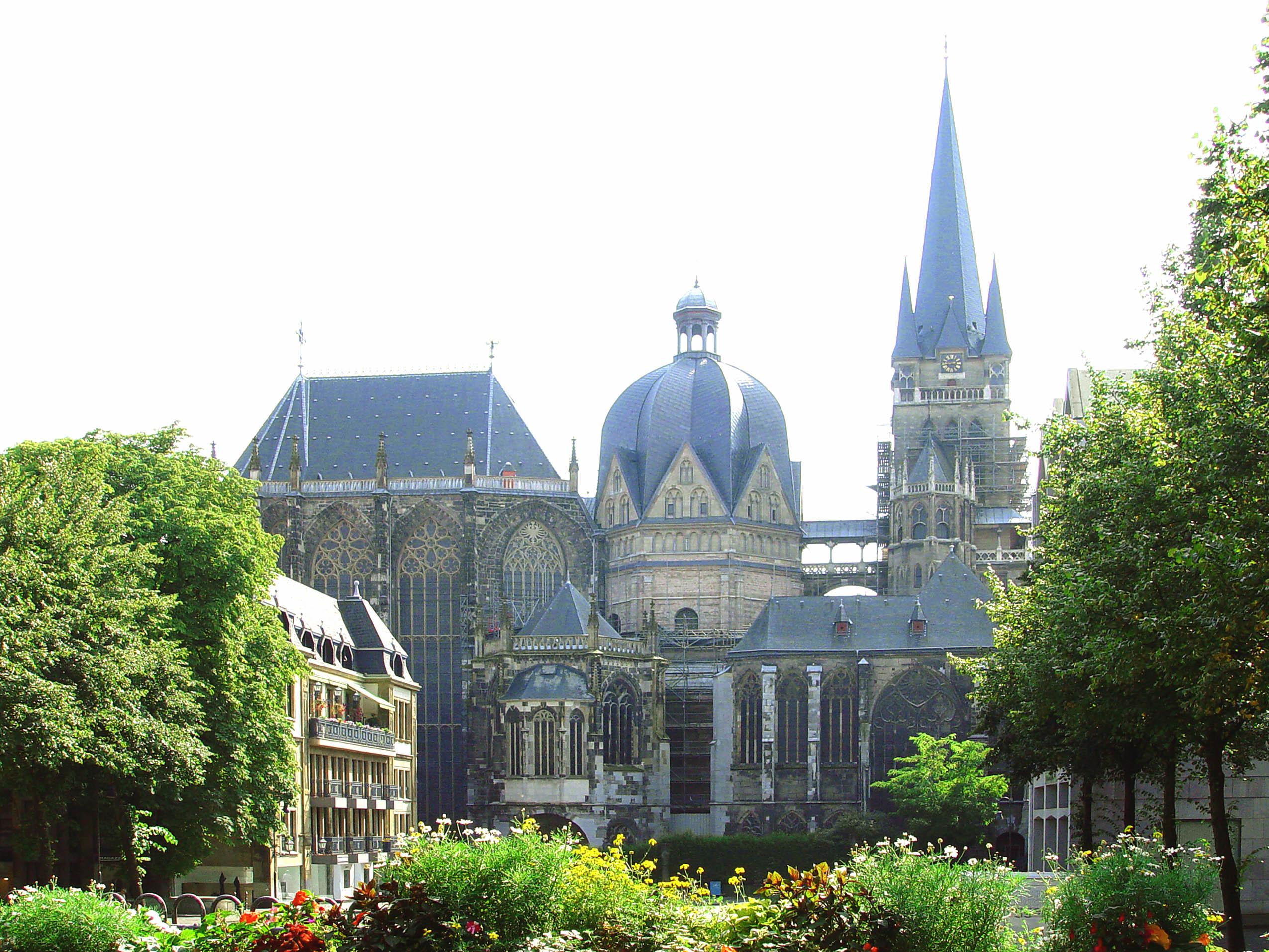
AAAHH!!! Real Monsters

AAAHH!!! Real Monsters is a 1994 animated series about teenage monsters in training, developed by Klasky-Csupo for the Nickelodeon TV channel. The show ran for four seasons on Nickelodeon's main United States cable channel, and is in reruns on Nicktoons TV.

The show focuses on three monsters in particular (Ickis, Oblina and Krumm) who attend a school for monsters under a city dump and learn to frighten humans. Many of the episodes revolve around the monsters making it to the surface in order to perform "scares" as class assignments.

The show was fairly popular in its time, though it never reached the level of popularity attained by Rugrats, Invader Zim, or Doug for example, nor did it have a particularly strong cult following, as did The Angry Beavers, Danny Phantom and Rocko's Modern Life. It is, however, still widely regarded as one of the better Klasky-Csupo Nicktoons.


Main characters
  • Ickis (voiced by Charles Adler)
Ickis is the son of the legendary monster Slickis. He is short and magenta, with long ears. Because of this, his scares often fail when he is mistaken for a rabbit. However, Ickis has the ability to grow to an enormous size when he is angered.
  • Oblina (voiced by Christine Cavanaugh)
Oblina comes from a wealthy monster family, and is considered to be The Gromble's best student. She is shaped like a black and white candy cane, with a pair of big, red lips. One of her favorite methods of scaring humans is reaching within herself and pulling out her internal organs.
  • Krumm (voiced by David Eccles)
Like the rest of his family, Krumm's eyeballs are not attached to his body. Thus, he is usually seen carrying them in his hands, though if he requires the use of both hands, he can carry his eyes delicately in his mouth. His most valuable tool in scaring is his overwhelming armpit stench.
  • The Gromble (voiced by Gregg Berger)
The Gromble is the intimidating teacher at the monster school, who demonstrates his tough love by belittling his students for poor scares. He is a tall, gray monster with two tufts of head hair, a beard and a tail, who wears a belt and a red pump on each of his four feet. In a controversial move in the first episode, The Gromble can be seen eating one of his students in one bite. Oblina later comments that, while monsters don't eat humans, she never said anything about them eating other monsters.
  • The Snorch (voiced by David Eccles)
The Snorch is a large and unintelligible monster who performs punishments on students who break the rules. Some of the punishments that The Snorch has handed out are square dancing and listening to human music.
  • Zimbo (voiced by Tim Curry)
Zimbo is a monster who resembles a bee with one mammalian leg and a humanoid face with green hair. Because of his small size and flying ability, he works as a spy for The Gromble, reporting any unruly behavior by the other monsters.
  • Simon (voiced by James Belushi)
Simon is an egotistical monster hunter who has dedicated his life to capturing monsters, particularly Ickis, and proving their existence to the world.

Congruence (geometry)

In geometry, two shapes are called congruent if one can be transformed into the other by an isometry, i.e. a combination of translations, rotations and reflections.

Note: This article is about congruences in geometry. For notions of congruence in algebra, see congruence relation.

Definition of congruence in analytic geometry

In a Euclidean system, congruence is fundamental; it's the counterpart of an equals sign in numerical analysis. In analytic geometry, congruence may be defined intuitively thus: two mappings of figures onto one Cartesian coordinate system are congruent if and only if, for any two points A and B in the first mapping, it is possible to find two corresponding points α and β in the second mapping so that the Euclidean distance between A and B is equal to the corresponding Euclidean distance between α and β.

A more formal definition: two subsets A and B of Euclidean space Rn are called congruent if there exists an isometry f : Rn → Rn (an element of the Euclidean group E(n)) with f(A) = B. Congruence is an equivalence relation.

Two sets that are not congruent are called non-congruent.

Congruence of triangles

Two triangles are congruent if their corresponding sides and angles are equal. Usually it is sufficient to establish the equality of three corresponding parts and use one of the following results to conclude the congruence of the two triangles:

SAS (Side-Angle-Side): Two triangles are congruent if a pair of corresponding sides and the included angle are equal.

SSS (Side-Side-Side): Two triangles are congruent if their corresponding sides are equal.

ASA (Angle-Side-Angle): Two triangles are congruent if a pair of corresponding angles and the included side are equal.

In most system of axioms, the three criteria — SAS, SSS and ASA — are established as theorems. However, in the infamous S.M.S.G. system which heralded the short lived infatuation with the New Math stream in mathematics education, SAS is taken as one (#16) of 22 postulates.

While the AAS (Angle-Angle-Side) condition also guarantees congruence, SSA (Side-Side-Angle) does not, as there are often two dissimilar triangles with a pair of corresponding sides and a non-included angle equal. This is known as the ambiguous case. Of course, AAA (Angle-Angle-Angle) says nothing about the size of the two triangles and hence shows only similarity and not congruence.

However, a special case of the SSA condition is the HL (Hypotenuse-Leg) condition. This is true because all right triangles (which this condition is used with) have a congruent angle (the right angle). If the hypotenuse and a certain leg of a triangle are congruent to the corresponding hypotenuse and leg of a different triangle, the two triangles are congruent.

RADIUS

RADIUS (Remote Authentication Dial In User Service) is an AAA (authentication, authorization and accounting) protocol for applications such as network access or IP mobility. It is intended to work in both local and roaming situations.

When you connect to an ISP using a modem, DSL, cable or wireless connection, you must enter your username and password. This information is passed to a Network Access Server (NAS) device over the Point-to-Point Protocol (PPP), then to a RADIUS server over the RADIUS protocol. The RADIUS server checks that the information is correct using authentication schemes like PAP, CHAP or EAP. If accepted, the server will then authorize access to the ISP system and select an IP address, L2TP parameters, etc.

The RADIUS server will also be notified when the session starts and stops, so that the user can be billed accordingly; or the data can be used for statistical purposes.

RADIUS was originally developed by Livingston Enterprises for their PortMaster series of Network Access Servers, but later (1997) published as RFC 2058 and RFC 2059 (current versions are RFC 2865 and RFC 2866). Now, several commercial and open-source RADIUS servers exist. Features can vary, but most can look up the users in text files, LDAP servers, various databases, etc. Accounting tickets can be written to text files, various databases, forwarded to external servers, etc. SNMP is often used for remote monitoring. RADIUS proxy servers are used for centralized administration and can rewrite RADIUS packets on the fly (for security reasons, or to convert between vendor dialects).

RADIUS is extensible; most vendors of RADIUS hardware and software implement their own dialects.

The DIAMETER protocol is the planned replacement for RADIUS, but is still backwards compatible.

AAA

AAA (or "triple-A") may be a code or designation for:
  • AAA, the highest possible score on any song that can be obtained in Dance Dance Revolution or beatmania IIDX
  • AAA (credit rating), the highest rating given by credit rating agencies
  • AAA battery, a standard size of dry-cell battery
  • Analog-Analog-Analog, used to code compact cassettes, meaning all phases of sound recording, audio mixing, and audio transfer are analog
  • "Class AAA", the highest level of play in minor league baseball in North America
AAA is also an abbreviation for:
  • AAA proteins (ATPases Associated with various cellular Activities), a protein superfamily
  • AAA protocol (Authentication, Authorization, and Accounting), in computer networks
  • Abdominal aortic aneurysm
  • Aces of ANSI Art, an ANSI art of the 1990s
  • Adult album alternative, a radio format
  • Advanced Amphibious Aircraft
  • Against All Authority, a punk band
  • Agricultural Adjustment Act of 1933
  • Agricultural Adjustment Administration, a New Deal agency
  • Alianza Anticomunista Argentina, the Argentine Anticommunist Alliance
  • Amateur Athletic Association
  • American Affordable Aircraft
  • American Airlines Arena
  • American Anthropological Association
  • American Arbitration Association
  • American Automobile Association, officially known as "AAA" since 2002
  • Anti-aircraft artillery
  • Ariana Afghan Airlines
  • ASCII Adjust after Addition, an Intel 80x86 processor instruction
  • Asistencia Asesoría y Administración, a lucha libre professional wrestling promotion in Mexico
  • Australian Automobile Association (AAA), encompassing the eight state-based constituent motoring organisations, including NRMA and RACV
  • Authentication, Authorization and Accounting

A. A. Gill

A. A. (Adrian) Gill (born June 28, 1954) is a British newspaper columnist and writer. He is also restaurant reviewer in the Style section of the London Sunday Times.

He was born in Edinburgh, Scotland, and studied at the Slade School of Art.

He is notorious for his acerbic style, on one occasion in 1997 describing the Welsh as 'loquacious, dissemblers, immoral liars, stunted, bigoted, dark, ugly, pugnacious little trolls', while two years later he angered Germans with an article called 'Hunforgiven', making numerous references to their Nazi past. In 2004, when writing about the ITV drama Island at War, based on the German occupation of Jersey and Guernsey, he asked "What have the Channel Islands ever done for us? A couple of really expensive potatoes, a few flowers and fatty milk."

AA Gill looks English, sounds English, but he disowns membership of a tribe he feels is made ugly by its simmering anger. "I don’t like the English. One at a time, I don’t mind them. I’ve loved some of them. It’s their collective persona I can’t warm to: the lumpen and louty, coarse, unsubtle, beady-eyed, beefy-bummed herd of England." "The truth is — and perhaps this is a little unworthy, a bit shameful — I find England and the English embarrassing. Fundamentally toe-curlingly embarrassing. And even though I look like one, sound like one, can imitate the social/mating behaviour of one, I’m not one. I always bridle with irritation when taken for an Englishman, and fill in those disembarkation cards by pedantically writing “Scots” in the appropriate box." (excert from his book - "The Angry Island")

His reviews of restaurants are also known for their frequent lack of detail about the food itself.

Aa en Hunze

The names 'Aa' (more precise the 'Drentsche Aa') and 'Hunze' refer to two small rivers through the municipality.

Population centres;

Achter 't Hout, Amen (Drenthe), Anderen, Anloo, Annen, Annerveenschekanaal, Balloërveld, Balloo, Bareveld, Bonnen, Bonnerveen, Bosje, Bovenstreek, De Hilte, Deurze, Eext, Eexterveen, Eexterveenschekanaal, Eexterzandvoort, Ekehaar, Eldersloo, Eleveld, Gasselte, Gasselterboerveen, Gasselterboerveenschemond, Gasselternijveen, Gasselternijveenschemond 1e Dwarsdiep, Gasselternijveenschemond 2e Dwarsdiep, Gasteren, Geelbroek, Gieten, Gieterveen, Gieterzandvoort, Grolloo, Kostvlies, Marwijksoord, Nieuw-Annerveen, Nieuwediep, Nijlande, Nooitgedacht, Oud-Annerveen, Papenvoort, Rolde, Schipborg, Schoonlo, Schreierswijk, Spijkerboor, Streek, Torenveen, Veenhof, Vredenheim.

Long place names;

The very small hamlets Gasselternijveenschemond 1e Dwarsdiep and Gasselternijveenschemond 2e Dwarsdiep have the longest settlement names in the Netherlands. Gasselterboerveenschemond is the longest single-word placename in the country.

AA E-Zine

AA E-Zine is a news and events ezine aimed at the Asian-American community in the Metro NY and Long Island areas of New York. It includes a special section covering Stony Brook University (SBU) news and Asian-American alumni from that institution.

Created in January 2002, AA E-Zine was the first online Asian-American college 'newspaper' in the country. It is a part of (AA)2 (a.k.a. AA Squared), a not-for-profit organization.

Aa River (France)

The Aa is an 80 km long river in northern France. Its source is near the village Bourthes. It flows through the following départements and cities:
  • Pas-de-Calais: Saint-Omer.
  • Nord: Gravelines.

Aa River

Aa is the name of a large number of small European rivers. The word is derived from the Old German aha, cognate to the Latin aqua, water (cf. German -ach). In German also Au and Aue exists, similar to å in North Germanic languages, with the meaning of moderately sized river. It is also an English noun, beloved of Scrabble players, meaning a stream. In eastern England, the word formerly took the form 'ea' but is now usually written 'eau' as in Bourne Eau.

The following are the more important streams of this name;
  • in France:
  • the river Aa, in the north of France, falling into the North Sea at Gravelines, and navigable as far as Saint-Omer.
  • in Switzerland:
  • Sarner Aa, a tributary of Lake Lucerne.
  • Engelberger Aa, also a tributary of Lake Lucerne.
  • Aabach, in the cantons of Lucerne and Aargau, which carries the waters of Lakes Baldegg and Hallwil into the Aar near Lenzburg.
  • in Germany:
  • the Westphalian Aa (Westfälische Aa), rising in the Teutoburg Forest, and joining the Werre at Herford.
  • the Münster Aa (Münstersche Aa), a tributary of the Ems near Münster.
  • the Great Aa (Große Aa), a tributary of the Ems near Lingen.
  • Aabach, in the basin of the Lippe River.
  • and several others (Ahauser Aa, Alstätter Aa, Bocholter Aa, Grenzaa, Ibbenbürener Aa, Speller Aa, Steinfurter Aa).
  • in the Netherlands and Belgium:
  • Drentse Aa, a small river in the Drenthe and Groningen provinces that also flows through Groningen city.
  • Aa, a river in Noord-Brabant, flowing through Helmond and 's-Hertogenbosch.
  • Aa or Weerijs, also in Noord-Brabant, a small river near Breda, rising at Wuustwezel, Belgium, joint by the Kleine Aa, rising at Brecht, Belgium.
  • several small rivers and canals in Groningen province, such as Pekel Aa, Ruiten Aa, Mussel Aa.
  • Aa, a river in Antwerp, and joining the Kleine Nete at Grobbendonk.
  • in Latvia:
  • Lielupe (in German Kurländische Aa)
  • Gauja (in German Livländische Aa), both falling into the Gulf of Riga, near Riga

Aa (plant)

Aa Rchb.f. 1854, is a genus of plants belonging to the family Orchidaceae. The genus name apparently was rendered by the author to always appear first in alphabetical listings. Another - disputed - explanation, is that Heinrich Gustav Reichenbach named this genus after Pieter van der Aa; the printer of the Dutch botanist Paul Herman's "Paradisus Batavus"[1].

Species in this genus can be found growing terrestrially in cold habitats near the snowline in the Andes and also in Costa Rica; they are usually found close to small streams. The elongated inflorescence grows from a basal rosette of leaves, terminating in a small white upside down flower with the lip at the top. This lip is fringed and hood-shaped. The flower gives off a pungent smell that attracts flies. This genus has often been confused with the orchid genus Altensteinia.

Species;
  • Aa achalensis Schltr. 1920 (Argentina)
  • Aa argyrolepis Rchb.f. 1854 (Colombia to Ecuador)
  • Aa calceata (Rchb.f.) Schltr. 1912 (Peru to Bolivia)
  • Aa colombiana Schltr. 1920 (Colombia to Ecuador)
  • Aa denticulata Schltr. 1920 (Colombia to Ecuador)
  • Aa erosa (Rchb.f.) Schltr. 1912 (Peru)
  • Aa fiebrigii (Schltr.) Schltr. 1912 (Bolivia)
  • Aa gymnandra (Rchb.f.) Schltr. 1912 (Bolivia)
  • Aa hartwegii Garay 1978 (Ecuador; Colombia; Venezuela)
  • Aa hieronymi (Cogn.) Schltr. 1912 (Argentina)
  • Aa inaequalis (Rchb.f.) Schltr. 1912 (Peru to Bolivia)
  • Aa leucantha (Rchb.f.) Schltr. 1920 (Colombia to Ecuador)
  • Aa lorentzii Schltr. 1920 (Argentina)
  • Aa macra Schltr. 1921 (Ecuador)
  • Aa maderoi Schltr. 1920 (Venezuela; Colombia; Ecuador)
  • Aa mandonii (Rchb.f.) Schltr. 1912 (Peru to Bolivia)
  • Aa matthewsii (Rchb.f.) Schltr. 1912 (Peru)
  • Aa microtidis Schltr. 1922 (Bolivia)
  • Aa nervosa (Kraenzl.) Schltr. 1912 (Chile)
  • Aa palacea (Kunth) Rchb.f. 1854 (Costa Rica to Bolivia)
  • Aa riobambae Schltr. 1921 (Ecuador)
  • Aa rosei Ames 1922 (Peru)
  • Aa schickendanzii Schltr. 1920 (Argentina)
  • Aa sphaeroglossa Schltr. 1922 (Bolivia)
  • Aa trilobulata Schltr. 1922 (Bolivia)
  • Aa weddeliana (Rchb.f.) Schltr. 1912 (Peru to NW Argentina)

Lava

Lava is molten rock that a volcano expels during an eruption. Lava, when first exuded from a volcanic vent, is a liquid at very high temperature: typically from 700°C to 1200°C (1300°F to 2200°F). Although the viscosity of lava is 100,000 times that of water, the viscous rock can flow many miles before eventually cooling and solidifying.

While still below the earth's surface, the molten rock is termed magma. Solidified lava is known as igneous rock, although the term "lava flow" refers to the hardened formation. An "active lava flow" would be one having still molten rock associated with it. The word 'lava' comes from Italian, and is probably ultimately derived from the Latin word labes which means a fall, slide, or sinking in. The first time it was used in connection with extruded magma was apparently in a short account written by Francesco Serao of the eruption of Vesuvius which took place between May 14 and June 4, 1737. In this he described "a flow of fiery lava" in analogy to the flow of water and mud down the flanks of the volcano following heavy rain.


Lava flow types;

The three main forms taken by flowing of lava are ‘a‘a, pāhoehoe, and pillow lava.
‘A‘a


Aa or ‘A‘a (Hawaiian English, from Hawaiian: ‘a‘ā meaning "stoney with rough lava", but also to "burn" or "blaze") is one of three basic types of flow lava. ‘A‘a is characterized by a rough or rubbly surface composed of broken lava blocks called clinker.

The loose, broken, and sharp, spiny surface of a solidified ‘a‘a flow makes walking difficult and slow. The clinkery surface actually covers a massive dense core, which was the most active part of the flow. As pasty lava in the core travels downslope, the clinkers are carried along at the surface. At the leading edge of an ‘a‘a flow, however, these cooled fragments tumble down the steep front and are buried by the advancing flow. This produces a layer of lava fragments both at the bottom and top of an ‘a‘a flow. Accretionary lava balls as large as 3 m (10 ft) are common on ‘a‘a flows. ‘A‘a is usually of higher viscosity than pāhoehoe (usually spelled just pahoehoe). Pāhoehoe can turn into ‘a‘a if it becomes turbulent due to meeting impediments or steep slopes.

Pāhoehoe;


Pahoehoe or Pāhoehoe (Hawaiian English, from Hawaiian, meaning "smooth, unbroken lava") is basaltic lava that has a smooth, hummocky, or ropy surface. A pāhoehoe flow typically advances as a series of small lobes and toes that continually break out from a cooled crust. The surface texture of pāhoehoe flows varies widely, displaying all kinds of bizarre shapes often referred to as lava sculpture.

Pillow lava;


Pillow lava is the rock type typically formed when lava emerges from an underwater volcanic vent or a lava flow enters the ocean. The viscous lava gains a solid crust immediately upon contact with the water, and this crust cracks and oozes additional large blobs or "pillows" as more lava emerges from the advancing flow. Since the majority of Earth's surface is covered by water, and most volcanoes are situated near or under it, pillow lava is actually very common.

Lava formations;

Lava, being much more viscous than water, tends not to flow as rapidly. Nevertheless, where the slope of the ground is considerable, it can advance with great speed. Even when at its hottest, it is somewhat viscous, like molasses, and this viscosity increases as it cools. Hence, on a level plain, and at some distance from its source, the lava-stream advances at a leisurely pace. In such circumstances the cooling proceeds so quickly that a crust of considerable thickness is soon formed on the top of the current, and persons who are bold enough may cross the stream by means of this natural bridge. Even where a deep interior flow continues, a crust may be formed on the surface; and someone whose curiosity exceeded their prudence could stand on the top of it, bore a hole through the crust, and see the lava flowing underneath their feet!

There are few things not made of rock that can resist the progress of flowing lava; trees, houses, everything yields to its massive assault. Trees soon catch fire due to the heat of approaching lava, and when the lava reaches them they emit a hissing noise, almost amounting to a shriek. The trees then plunge into the molten flood and are seen no more. Even the sea cannot stop the lava-stream, but retires on its approach; promontories stretching a considerable distance from the shore are formed in this manner as the molten lava hardens into stone.

Lava cascades and fountains;

The eruptions of lava are sometimes attended by peculiarities which impart to them much additional grandeur. Instances have occurred in which the fiery stream has plunged over a sheer precipice of immense height, so as to produce a glowing cascade exceeding in breadth and perpendicular descent the celebrated Niagara Falls. In other cases, the lava, instead of at once flowing down the sides of the mountain, has been first thrown up into the air as a fiery fountain several hundred feet in height.

Lava lakes;

There are only a few sites in the world where permanent lakes of lava exist. These include:
  • Mount Erebus, Antarctica
  • Kilauea Volcano, Hawai`i
  • Erta Ale, Ethiopia
  • Nyiragongo, Zaire


Composition of lavas;

The lavas of different mountains, when cooled and hardened, differ much in their appearance and composition. If a rhyolite lava-stream comes into contact with water, for example entering the sea, it can quickly freeze into a black glassy substance called obsidian. This is particularly common in Iceland and Lipari. It is used for ornamental purposes - it presents a different appearance according to the manner in which it is cut. When cut in one direction it is of a beautiful jetty black; when cut across that direction it is glistering gray. In prehistoric times its hardness and conchoidal fracture properties meant it was widely used to make knives.


The lavas of Vesuvius are generally of a brown colour, and are also used in the arts. In them are found the beautiful olive-green crystals of the mineral called olivine, sometimes used by jewellers. But the most useful of all volcanic productions is perhaps sulfur, in which Mount Etna has been very prolific.

Towns destroyed by lava;

Kaimū, Hawaii (abandoned)
Kalapana, Hawaii (abandoned)
Kapoho, Hawaii (abandoned)
Keawaiki, Hawaii (abandoned)
Koa‘e, Hawaii (abandoned)
San Sebastiano al Vesuvio, Italy (rebuilt)


Towns partially destroyed by lava flows;
  • Catania, Italy, in the eruption Mount Etna in 1669 (rebuilt)
  • Goma, Democratic Republic of Congo, in the eruption of Nyiragongo in 2002
  • Heimaey, Iceland, in the 1973 Eldfell eruption (rebuilt)
  • Royal Gardens, Hawaii, by the eruption of Kilauea in 1986-87 (abandoned)

AaNet

aaNet is a Queensland based Australian Internet Service Provider, that provides ADSL,Web Hosting and VoIP to Residential and Businesses throughout Australia.

Aalborg Boldspilklub

Aalborg Boldspilklub, known as AaB for short, is a Danish sports club based in Aalborg, Denmark's fourth largest city. The club was founded in 1885, originally as the Aalborg Cricket Club (Aalborg Cricketklub) by English engineers who were building Jutland's railway system. Today the club plays football, ice hockey, and handball. The football division has been one of the better clubs in the Danish Superliga the past 10 years, with two championships, in 1995 and 1999.

The topsponsor is the regional bank, Spar Nord. The clothsponsor is Hummel.

The clubs' stadium, the Aalborg Stadion, (capacity 16,000), opened in 1920.

AaB won the Danish Cup in 1966 and 1970.

Former players;
  • Torben Boye
  • Jesper Grønkjær
  • Henning Munk Jensen
  • Ståle Solbakken
  • Søren Frederiksen
  • Ib Simonsen
  • Brian Priske
  • Jes Høgh

A

The letter A is the first (1st) letter in the Latin alphabet. Its name in English is a, plural a's or aes.

History;

The letter A probably started as a pictogram of an ox head in Egyptian hieroglyphs or the Proto-semitic alphabet.

Egyptian hieroglyphic ox head
Egyptian hieroglyph
ox head
Proto-semitic ox head
Proto-semitic
ox head
Phoenician aleph
Phoenician aleph
Greek alpha
Greek alpha
Etruscan A
Etruscan A
Roman A
Roman A

By 1600 BC, the Phoenician alphabet's letter had a linear form that served as the basis for all later forms. Its name must have corresponded closely to the Hebrew aleph.

When the Ancient Greeks adopted the alphabet, they had no use for the glottal stop that the letter had denoted in Phoenician and other Semitic languages, so they used the sign for the vowel /ɑ/, and changed its name to alpha. In the earliest Greek inscriptions, dating to the 8th century BC, the letter rests upon its side, but in the Greek alphabet of later times it generally resembles the modern capital letter, although many local varieties can be distinguished by the shortening of one leg, or by the angle at which the cross line is set.

The Etruscans brought the Greek alphabet to what was Italy and left the letter unchanged. The Romans later adopted the Etruscan alphabet to write Latin, and the resulting letter was preserved in the modern Latin alphabet used to write many languages, including English.

Typography;

The modern lowercase letter a derives from Greek handwriting, which evolved from a form similar to the current capital to a circular shape with a projection by the 4th century.

Blackletter A
Blackletter A
Uncial A
UncialA
Another Capital A
Modern Roman A
Modern Roman A
Modern Italic A
Modern Italic A
Modern Script A
Modern Script A
Usage;

In English, the letter A by itself usually denotes the lax open front unrounded vowel (IPA /æ/) as in pad, the open back unrounded vowel (IPA /ɑ/) as in father, or, in concert with a later e, the diphthong /eɪ/ (though the actual pronunciation depends on the dialect) as in ace, due to effects of the Great vowel shift.

In most other languages that use the Latin alphabet, the letter A denotes either an open back unrounded vowel (IPA /ɑ/), or an open central unrounded vowel (IPA /a/).

In the International Phonetic Alphabet, variants of the letter A denote various vowels. In X-SAMPA, capital A denotes the open back unrounded vowel and lowercase a denotes the open front unrounded vowel.

A also is the English indefinite article, extended to an before a vowel.

Alternative representations;

In the NATO phonetic alphabet the letter A is Alfa (which may also be spelled Alpha in English-only environments).

In international Morse code the letter A is DitDah: · -

In Braille the letter A is represented as ⠁ (in Unicode), the dot pattern:

Computing;

In Unicode the capital A is codepoint U+0041 and the lowercase a is U+0061.

In Hex, A is the character used to represent decimal 10, or in binary, 01010

The ASCII code for capital A is 65 and for lowercase a is 97; or in binary 01000001 and 01100001, correspondingly.

The EBCDIC code for capital A is 193 and for lowercase a is 129.

The numeric character references in HTML and XML are "A" and "a" for upper and lower case respectively.

Meanings for A;

Aa, Estonia

Aa (German: Haakhof), is a village in northern Estonia, on the southern coast of the Gulf of Finland in the eastern part of the Lüganuse Municipality of Ida-Viru County, 10 km from Lüganuse. Part of the village, including the Aa manor, is situated on the North Estonian limestone bank. According to the 2000 census, the population of Aa was 190.

The first written record of Aa dates back to a 1241 Danish census (Liber Census Daniae) where its name was listed as Hazæ. The village is located on the territory of the Lüganuse Parish of the historical county of Virumaa.

The Aa manor (first built 1426-1487) is now housing a home for aged people. Other noteworthy sights in Aa include a former garden pavilion (now chapel), the manor park (Aa park, 65,000 m² nature protection area), a pine grove, youth camp Giideon of the Estonian Methodist Church, and a sand beach.

Oh My Goddess!

Oh My Goddess! (also known as Ah! My Goddess, Japanese: Aa! Megami-sama in Japan and in some English releases) is an extremely popular seinen (men's) manga and anime series by Kosuke Fujishima.


Naming;

The original Japanese title is "Aa, Megami-sama". The question of how best to translate this phrase has led to a great deal of debate and flamewars amongst English-speaking anime fans during the early 1990s. The US-anime import company AnimEigo obtained the OVA rights and entitled them: "Oh! My Goddess". Many felt the title should be "Ah! My Goddess".

Several references to "Oh my god" and "Oh my goddess" in a number of songs (such as Hottokenai No Sa, Megami-sama tto Oyoubi) only fueled the debate further.

Ultimately Fujishima himself was consulted. His initial reaction was to agree with the "Ah" camp, but once the English phrase "Oh my God" was explained to him, he decided the "Oh" would be closer to what he was trying to convey.

Pioneer chose to use "Ah" in their North American release of the movie; but this was possibly due not to any aesthetic considerations but rather because AnimEigo uses the title "Oh My Goddess"). "Oh My Goddess!" (with the "!" at the end, rather than after "Oh") is the official English title for the manga, which is published by Dark Horse Comics. AnimeEigo later started using "Oh My Goddess!". The bilingual release, which was released by Kodansha, uses "Ah! My Goddess".

Plots;
Oh My Goddess! (manga)


The manga was first published in 1988 as a spinoff from the manga You're Under Arrest (taihoshichauzou); Fujishima had added a four-panel gag strip to You're Under Arrest in which the main characters prayed to a goddess. The gag was very popular, and Fujishima liked the look of his drawings of the goddess so he began drawing a full-fledged manga for the goddess. Oh My Goddess! was published in the Japanese publisher Kodansha's monthly Afternoon magazine, where it was very warmly received; it has been a staple of Afternoon ever since. A complete collection of the manga to date would run over 200 chapters (~thirty collected volumes). Like most popular manga, an OVA was made based on it. With the OVA's success, the stage was set for two TV series and a movie to follow. Due to its length, only part of the plot, the one common to the OAV and TV series as well as the manga shall be included. Sites with more lengthy and detailed synopses are listed in the External Links.

Small bits of Norse mythology are incorporated in the original Manga. For instance the names of the main Goddesses resemble or are identical to those in Norse mythology. The plot of the manga (and of most OMG series) centers around a good-natured, yet hapless and girlfriend-less college freshman named Keiichi Morisato. He is often imposed upon by his elder dorm-mates and brow-beaten into taking phone messages and doing miscellaneous chores for them. One day, exhausted from completing a long list of chores given him by the other students who then left to party, Keiichi wearily dials for some fast food. To his surprise, he discovers that he has actually dialled the number of the Goddess Technical Help Line (or Goddess Relief Line, literally translated); before he can explain his error, a beautiful goddess (Belldandy) has materialized within his room. She tells him that the Almighty has taken mercy upon him, and has sent her to grant him one wish. Understandably, Keiichi is sceptical, thinking it more plausible that his dormmates are playing some manner of practical joke on him. So he seeks to defuse the prank by asking Belldandy to be his girlfriend forever, thinking that when the wish was refused, as it must be, he would have turned the tables on them.

The wish is granted. But Keiichi soon discovers a downside to this wish: Belldandy has nowhere to live, and must live with him. But the dormitory is adamantly same-sex, and so Keiichi and Belldandy are forced onto the street. As luck would have it, Keiichi's motorcycle had just been repaired, so both could ride on it. Their attempts at finding shelter at various friends' houses fail due to the friend's lust for Belldandy, so Keiichi is forced to seek shelter from a fierce storm in an old apparently abandoned Buddhist temple. The next morning, they are greeted by a young monk who is the sole inhabitant of the temple. He welcomes them and allows them to stay for a little while until they can find lodging; he then immediately puts them to work maintaining the temple grounds. When Belldandy uses her powers to save Keiichi, the priest begins to fear that perhaps Belldandy is no ordinary girl, but a foreign demon of some sort. He investigates, and is eventually persuaded of Belldandy's intrinsic goodness when he witnesses her solicitous care of the temple premises and her uncanny bond with wild animals; he decides to go on pilgrimage to India, granting the two lovers permission to remain in the temple contingent upon its good maintenance. Due to luck, or perhaps divine intervention, the two now have a home.

Oh My Goddess! (OVA);


A five episode OVA Oh! My Goddess series featuring Keiichi, Belldandy, and the other major characters from the manga was produced in 1991 by AIC and was distributed in the US by AnimEigo ([1]). The OAV followed the same initial plot as the manga, but with many minor events and characterizations removed. The other goddesses, Urd and Skuld, are introduced comparatively early (in the second and third episodes, respectively), and in the final episode the Almighty, who previously had been enforcing Keiichi's wish, reverses himself and begins working to separate the two, forcing Belldandy to return to Heaven and her duties. The ensuing events are depicted in the Oh My Goddess! movie.

Oh My Goddess! The Movie;


In 2000, the Oh! My Goddess: The Movie (Japanese: AA! Megami Sama: The Movie) featuring the characters Keichii, Belldandy, Celestine and Peorth, among others, was produced by AIC. It was distributed in the US by Geneon Entertainment in 2001. The storyline is set a long time after both the OVA and the 2005 TV series.

One of the new characters, Celestine, was a high-ranking god in Heaven, who had one of Heaven's council seats. Celestine also served as Belldandy's mentor for most of her Goddess training, begun when she was a young girl. Celestine observed too much suffering in the "third dimension" (that is, Earth) and did not want Belldandy to witness such a cruel world, since he knew that Belldandy would eventually become an agent for the Goddess Relief Office.

His idea was to fast-forward time on Earth, so that the world would evolve past hurting itself. Trying to enlist Belldandy into his efforts, Celestine showed Belldandy the Judgement Gate. The Judgement Gate is a construct in Heaven through which mortal lovers would pass. If their love was insufficiently strong and pure, they would be forcibly separated- forver. Morgan and her lover were forced apart forever here.


Fortunately, Celestine's plot was discovered by agents of the Allmighty, who attempted to capture and hold him for judgement. Belldandy, confused and saddened by what she had seen at the Gate, lashed out with her full powers and killed the agents. It was to no avail, as both she and Celestine were caught regardless. As punishment, Celestine was incarcerated in a moon prison for rebelling against the Allmighty's plan for the Earth.

This would all be prologue- the precipating event of the Movie was the escape of Celestine from the moon prison. He made contact with Belldandy, and infected her with a "virus" that would erase her memories subsequent to meeting Keiichi. This same virus used Belldandy as an infection vector to infiltrate the central Heavenly computer Yggdrasil. The virus was synchronized with Belldandy's emotional states. Celestine planned to place Belldandy under a lot of emotional stress; this stress would be transmitted to the virus, and compromise Yggdrasil's defences. This accomplished, he then planned to take Belldandy away with him. At this stage he was interruped by Keiichi, Urd, Skuld, and Peorth. Balked, Celestine resorted to his original plan. This plan would also be balked by them. He failed to realize that although this method would cause the Earth and its inhabitants to age, it wouldn't cause them to mature, and that Belldandy was happy on Earth - living, learning, and loving. After this realization, Celestine left peaceably.

Oh My Goddess!(TV);


In January 2005, a new anime TV series began airing in Japan whose title was identical to the OVA Oh! My Goddess (also known as Ah! My Goddess or in Japanese: Aa! Megami-sama!) produced by AIC distributed in the US by Media Blasters. Although it has the same voice cast as the 5-episode OVA series, it is a manga-oriented reboot. First release in the US is scheduled for September 2005.

You're a Goddess? - 1x01 Aired: 2005-01-06 (Japanese: Kimi wa Megami-sama?): The anime starts explaining fate and summarizes the Heavenly system. Later on, the story centers around Keiichi Morisato ( Morisato Kei'ichi), a misfortunate yet helpful college student who loves motorbikes (a passion shared by manga creator Kosuke Fujishima). One day, while trying to deliver a message via a phone Keiichi is redirected by heavenly super computer Yggdrasil to the Goddess Relief Office to be answered by Belldandy (Berudandī). Before Keiichi could begin comprehending, a "Pure-white-winged" Goddess, Belldandy, warps into Keiichis room through a mirror.

Ah! Can the One Who Believes be Saved? - 1x02 Aired: 2005-01-13 (Japanese: Aa! Shinjiru Mono ha Tsuwareru): Initially, Keiichi thinks his senpai's (senior at school) are playing him a trick because he has no luck with girls. Never the less she explains Keiichi that he received Heavens grace: being granted one wish which can range from enough wealth to last lifetimes to the utter destruction of the Earth. Keiichi unconvinced interrogates if Belldandy is some sort of a "faith-based religion" agent trying to trick him in buying a Vase or something. Belldandy explains that she is a Goddess and cannot neither make things up nor lie. To test this Keiichi asks if Belldandy thinks he is cool. Belldandy answering "yes" convinces Keiichi that this is indeed a prank since he has no luck with girls. Belldandy reads his mind and tells him she cannot understand why Keiichi does not have any luck with girls. Keiichi explains by blaming his height (1.6 m), facial features, and his lack of wealth. Belldandy counters that such qualities do not determine ones charm. Keiichi half-jokingly wishes that Belldandy stay with him forever. His wish is granted. Soon after, Keiichi is kicked out of his dorm after being caught with Belldandy by his senpais in a male only dorm.


Ah! Studying, My Family, and a Goddess! - 1x03 Aired: 2005-01-20 (Japanese:Aa! Shuugyou to Wagake to Megami-sama!): The next day, Keiichi and Belldandy begin looking for a new place to live when a coincidental gust of wind (with a little help from Belldandy) blows away Keiichis 2,000 Yen bill to a Buddhist temple. Following his money, Keiichi gets attacked by Koshian-sama who mistook him for a thief stealing offers. To apologize for the attack, Koshian-sama allowed Keiichi to stay if they also worked to maintenance the temple. Not long after Koshian-sama discovers Belldandy's powers, witnessing Belldandy singing with Holy-bell, Belldandy's Angel, and thusly repairing the temple to its original form by singing a "magical" song. Koshian-sama feels "green" and next morning starts on a nation-wide pilgrimage for enlightenment, leaving the temple to Keiichi and Belldandy.


Ah! The Queen and the Goddess! - 1x04 Aired: 2005-01-27 (Japanese: Ah! Joou-sama to Megami-sama!): After Koshian-sama's departure, Keiichi returns to his regular college life at Nekomi Institute of Technology, bringing Belldandy with him. Sayoko Mishima notices Belldandy and feels she is a challenge/threat to her social status as a "campus queen". Sayoko Mishima attempts to expel Belldandy as she does not have an official student status. Keiichi, Tamiya and Otaki with a little help from Belldandy, forge fake documentation listing Belldandy as a student. Her initial ploy failed, Sayoko Mishima tries flirting with Keiichi in hopes of sending Belldandy away by stealing her guy. However all attempts fail due to the Ultimate Force or the All-mighty ensuring the wish of Keiichi is honored by subtly defeating or neutralizing anything circumstances, people, or things that threaten to separate Keiichi and Belldandy (as enforced by Yggdrasil). One example is when a large chunk of debris falls, nearly crushing both to death- but a last second truck passing by prevents the debris hitting them. Eventually, Belldandy receives her student ID and becomes an official bona fide student of Nekomi Institute of Technology.


Ah! Living under one roof! - 1x05 Aired: 2005-02-03 (Japanese:Aa! Hitotsu Yane no Shita de!): Fueled by the social presure, Keiichi slowly comes to the realisation of her feelings towards belldandy. He also starts feeling under pressure, feeling he has been "enslaving" Belldandy by inadvertently forcing her to stay with him. Because of his naturally shy and reticent nature as well as the risk of a "free" belldandy leaving (due to a void contract), Keiichi is less than reluctant to express his true feelings towards Belldandy directly. After a few incomplete/failed attempts Keiichi finaly creates a romantic enviorment to confess to Belldandy. Ultimately Belldandy interprets Keiichis anxiety as a sign of illness and after moving him to his futon starts performing "healing" magic on him. Semi-consciously, Keiichi explains to her that he wants her to stay of her own free will, not because she is forced to by a contract derived from his wish.


Ah! Unexpectedly finding something blessed? - 1x06 Aired: 2005-02-10 (Japanese: Aa! Hori Dashi Mono ni Megumi Ari?): The next day Megumi Morisato, Keiichi's sister, moves to town. She informs Keiichi that she got accepted to a university in the same region as Keiichi, in hopes to get rid of his sister Keiichi goes to great lengths to find Megumi a place to live but fails to do so as Megumi's requirements and cash of 200,000 Yen makes finding an apartment impossible. With little help from Belldandy Megumi manages to find a place to rent days later however the house is "haunted" by a Third class Earth spirit. The Earth spirit attacks Keiichi while locking Belldandy in the adjacent room. Belldandy warps in through a mirror and defeats the Earth spirit with mild irritation by literally pinning him to the wall with one hit before he could harm Keiichi. The Earth spirit after being defeated explains that people had placed a stake through his earth-power-vein and that is why he was keeping the apartment room vacant. Belldandy restores the earth-vein link and the Earth spirit swears to protect Keiichi's sister and transforms into his chosen form, a mouse. Megumi at this point identifies the school she is attending to: Nekomi Institute of Technology.


Ah! A place to express your feelings! - 1x07 Aired: 2005-02-17 (Japanese: Aa! Omoi tsutaeru bashou!): Following on comes the Japanese valentines day. Trying very hard to get used to earth customs and make Keiichi happy, Belldandy storms out of the cafe to ask Sayoko Mishima about "romantic places". Sayoko Mishima abuses Belldandy's innocence and tells her to ask Toshiyuki Aoshima. Toshiyuki Aoshima being the campus playboy tries to take advantage of Belldandy in a hotel room, shocked Belldandy creates an indoor hurricane spinning Toshiyuki Aoshima quite a bit. Using too much power, Belldandy collapses meanwhile Keiichi locates her (partially because of the big hole in the hotel room wall) and takes her to Megumi's room. After regaining consciousness Belldandy receives two tickets for a "Motorcycle Fair" from Megumi. After that Belldandy takes Keiichi to a number of places (ranging from model car shops to junkyards) she thinks Keiichi will like however she fails to find a romantic spot. Keiichi suggests a boat trip and then they exchange a pack of chocolates celebrating each others valentines day. Belldandy starts showing flu like symptoms.


Ah! Taking An Examination of Love, Starting with A Deviation Value of 30! - 1x08 Aired: 2005-02-24 (Japanese:Aa! Hensatsuchi Sanjuu kara no Renai Juken!): Belldandy's flu like symptoms does not get any better through the next day so Keiichi asks Belldandy to return home early while Keiichi looks for medication. He meets a pleasant pharmacist in reality disguised Urd, who gives Keiichi a video. While Keiichi is watching this video Urd gets carried away and teleports out of the TV but accidentally slams her knee into Keiichi's face. Belldandy discovers the unconscious Keiichi and quickly checks his memory and realizes Urd is nearby. Urd appears and introduces herself. Urd explains that there is a problem with Yggdrasil and the ultimate force. Urd explains Keiichi that to fix the problem he needs to kiss Belldandy. Urd tries to force Keiichi to "kiss" Belldandy ultimately through mind control however Belldandy notices and dispels it, as a result Belldandy is forced to explain why her older sister ranks lower then she does, because of her rather extreme measures and the primary reason Urd has limited license is because she can lie while other goddesses cannot.


Ah! The Secret of the Queen and the Goddess! - 1x09 Aired: 2005-03-03 (Japanese: Aa! Joou-sama to Megami no Himitsu!): Later that week Belldandy, Urd, Sayoko Mishima participate in the Miss Nekomi contest "electing" the campus queen. Urd monopolizes the stage and steals it from Sayoko Mishima meanwhile Belldandy shows up. Sayoko Mishima challenges to sing, the DJ accidentally plays Enka making Urd fall asleep. Sayoko Mishima then orders the DJ to switch to her song, Urd wakes up and zaps the electronics in fury. Belldandy causes a little shower to extinguish the fire. Ultimately Belldandy is elected campus queen with 999 points followed by 123 points by Urd, Sayoko Mishima only gets 13 points. After the contest a lot of people start heavy drinking, especially Sayoko Mishima and Urd. While Keiichi and Belldandy are returning to the temple, intoxicated Sayoko Mishima jumps in front of their bike, Belldandy lifts her up before an impact. Keiichi and Belldandy transport Sayoko Mishima to her house. After waking up Sayoko Mishima becomes increasingly suspicious of Belldandy's power. Sayoko Mishima and Toshiyuki Aoshima join powers to document Belldandy's power but fail. They later abduct Keiichi and torture him (with French snails on his back and by bashing model cars) to reveal the true identity of Belldandy. Belldandy locates Keiichi by kindly asking random animals and insects his location, finally a cat reveals Keiichis final location sitting on a car. Belldandy warps through a mirror and saves Keiichi. Meanwhile Urd punishes Toshiyuki Aoshima and his gang primarily for forcing her to listen to Enya. At the very end Urd intoxicates both Sayoko Mishima and Toshiyuki Aoshima to think the whole incident was a "happy dream". Doesn't seem to work on Sayoko Mishima.


Ah! Will the Auto Club Win? - 1x10 Aired: 2005-03-10 (Japanese:Aa! Jidoushabu wa Katemasuka?): Toshiyuki Aoshima declares that he is determined to acquire Belldandy while sitting with 5 girls near a water fountain. Few days later it is the club week where various clubs hire drive. Motor club Keiichi is part of gets no new people to sign up, furthermore no one even asks questions. Keiichi asks Megumi why she doesn't join the Motor club and she answers that she already joined the motor club. Later the reason is revealed that a Four Wheels club was formed talking all the attention by using a sex appeal. Toshiyuki Aoshima challenges the motor club in a race and that the looser will disband. Belldandy accepts the challenge. Same night Toshiyuki Aoshima and his men completely destroy the Motor clubs race vehicle. Next morning Motor club members find their 3 wheeler completely destroyed. Belldandy identifies the people responsible though magic and gets quite angry. Toshiyuki Aoshima shows up and suggests that he will cancel the race if Keiichi apologizes (in order to prove his character to disgust Belldandy). Keiichi declines and Belldandy in fury shakes him away (literally). The Motor club manages to reassemble their 3 wheeler with lots of problems unaddressed. Toshiyuki Aoshima locks Belldandy in her ready room just prior to race. Race rules require two drivers on any off-road race. Belldandy mirror warps next to Keiichi. Four Wheeler club continues the race as first most of the race as they have a professional driver and a real off-road vehicle. Keiichi's 3 wheeler starts falling apart few minutes into the race. Belldandy uses all her power to keep the 3 wheeler in one piece and ultimately falls to her dormant stage for using too much energy. Just about now Toshiyuki Aoshima's second wave attack Keiichi and force him to crash into a sand hill. Urd appears and suggests Keiichi will have to give up, Keiichi objects and at the last minute Sora Hasegawa informs Keiichi of a "path" which is the tip of a block stretching across the desert. Keiichi drives over the thin path at full speed. Meanwhile Toshiyuki Aoshima's team gets stuck in sand. Keiichi completes the race first place. Belldandy wakes up later in somewhat panic and is relieved to hear that Keiichi won.


Ah! A Devil has Come and is Creating Calamity! - 1x11 Aired: 2005-03-17 (Japanese:Aa! Akuma ga Kitarite Wazawai wo Nasu!): Keiichi wakes up with a nightmare, later complains about not sleeping well due to nightmares. Tamiya and Otaki while browsing for good luck charms notice a Demon CD which apparently sends a sub-conscious message to them. They buy the Demon CD and return to the Motor club dorm. They later explain they also lack a CD player. Not being the brightest kind they paint the silver side of the CD with a black board marker and place the CD on a recorder and play at 45 RPM. This CD is actually a catalyst allowing demons to enter the 3rd dimension (earth). After the CD completes 2 turns on the recorder Marller (Mara) is summoned. He grants Tamiya and Otaki a wish for releasing her. Tamiya and Otaki order her to get out of their sacred dorm. Marller does so rather quickly as Marller was terrified by the good luck charms in Tamiya and Otaki's room leaves the catalysis CD behind. Disguised as a Tanuki statue Marller infiltrates the Temple Keiichi and Belldandy resides. Marller converts Keiichi into a Moppet and password protects it so that the goddesses can't convert him back. Belldandy and Urd quickly realize they need the password only Marller knows to convert Keiichi back to his orriginal form. Urd remembers about the catalysis so they start searching for it. Keiichi in his/its bike form recognize the vague image inside a bowl generated by goddess magic. Belldandy goes off to find Marller while Urd "rides" Keiichi bike. At this point a warning is displayed and Keiichi reminds Urd that although she is a goddess she needs to wear a helmet. Throughout the series even when riding the side seat of a 3 wheeler bike characters always wear helmets. Urd breaks in to the Motor club and interrogates Tamiya and Otaki to reveal the location of the Demon CD. Terrified Tamiya and Otaki tell Urd. Locating and acquiring the Demon CD in a music store and rides Keiichi bike towards Belldandy. Meanwhile Belldandy and Marller have engaged in battle (watched by Hijiri and her brother). Marller using all her power started gaining ground against Belldandy's sealed power, just in time Urd throes a number of good luck charms effectively restraining Marller. Belldandy threatens to seal Marller if she doesn't reveal the password to convert Keiichi to his original form. Marller not having an alternative complies and while Belldandy was busy applying the password she vanishes.


Ah! Compare and Contrast Goddesses and Queens? - 1x12 Aired: 2005-03-24 (Japanese:Aa! Megumi to Joou wo Tenbin ni Kakete?): Still depressed at loosing Queen title to Belldandy, Sayoko Mishima takes the attention of Marller at a bar. Next day she wakes up and notices Marller. After a rather lengthy argument Marller suggests a contract with Sayoko Mishima. According to the contract Marller will help Sayoko Mishima retrieve her Queen status if Sayoko Mishima retrieves the Demon CD from the Goddesses. Sayoko Mishima visits the Buddhist temple where Keiichi, Urd, and Belldandy resides. Urd greets her and they have a casual yet not so pleasant conversation. Sayoko Mishima turns the TV on to channel 9, Anya. Urd falls asleep and Sayoko Mishima takes the Demon CD. After Sayoko Mishima hands the Demon CD to Marller, she explains her plan to kick Belldandy out, she would disrupt the balance of Keiichi's heart. Mishima touches the balance and then leaves. Keiichi becomes almost hypnotized after seeing Mishima, loosing his interest completely to Belldandy. They go to a disco. After a little competition between Belldandy and Mishima, Keiichi asks if Mishima could teach him how to dance like her, then sends Belldandy home. After the disco visit they go to a cafe. Keiichi unconsciously orders Belldandy's favorite tea for himself and Mishima and later in discussion mentions this to Mishima, enraged Mishima attempts to leave. Keiichi apologizes and suggests a trip to see the sunset at the shore and claims it is Mishima's favorite making the situation worse. ultimately Mishima slaps Keiichi in the face basically semi breaking the spell paralyzing Keiichi. Meanwhile channel 9 switches to news from Anya and Urd awakes. Urd casts a spell to make all channels on all networks show channel 6's rock time forcing Marller to dance dropping the scale managing Keiichi's heart. Keiichi returns to his original self and immediately starts looking for Belldandy. First he attempts to call her at the temple but unable to reach her takes a wild guess and goes to the Night express where they exchanged chocolates few days earlier. He catches Belldandy a second before she ascends back to heaven with a broken heart. Meanwhile Sayoko Mishima returns to the bar getting drunk just like the day before.

Ah! An Exchange Diary with the Goddess? (Recap Episode) - 1x12.5 Aired: 2005-03-31 (Japanese: Aa! Megami to Koukan Nikki?): Belldandy and Keiichi explain each other their perspectives on the events they experienced until episode 12. A few points in the plot are also better clarified. Instead of having lots of flashbacks, on the TV serries it was decided to do a single 25min episode summerising the story up to this point for people just started the serries.

Ah! Who Does Onee-sama Belong To? - 1x13 Aired: 2005-04-07 (Japanese:Aa! Onee-sama wa Dare no Mono?):

Ah! Teaching Practice By the Name of Confrontation! - 1x14 Aired: 2005-04-14 (Japanese:Aa! Taiketsu To Iu Na No Kyouiku Jisshuu!):

Ah! My Heart Was Stolen By a Goddess! - 1x15 Aired: 2005-04-21 (Japanese:Aa! Megami ni Kokoro Ubawarete!):


Ah! Catastrophe Arrives. An Auspicious Sign Stands? - 1x16 Aired: 2005-04-28 (Japanese:Aa! Wazawai Kitari te Chabashira Tsu?):

Ah! What are ability and effort? - 1x17 Aired: 2005-05-05 (Japanese: Aa! Sainou to Doryoku Te, Nan Desu Ka?):

Ah! Fated Confession in the Moonlight? - 1x18 Aired: 2005-05-12 (Japanese:Aa! Unmei no Kokuhaku wa Tsuki no Shita de?):


Ah! Don't Gaze At Me With Those Eyes? - 1x19 Aired: 2005-05-19 (Japanese:めAa! Sonna Hitomi de Mitsumenaide?):

Ah! Save the Goddess, If You're a Man!? - 1x20 Aired: 2005-05-26 (Japanese:Aa! Megami wo Sukue! Otoko Nara!?)

Ah! The One I Yearn For Is A White-Winged Angel! - 1x21 Aired: 2005-06-02 (Japanese: Aa! Akogare wa Shiroi Tsubasa no Tenshi!)

Ah! A Devil's Whisper, Along With A Pot? - 1x22 Aired: 2005-06-16 (Japanese:Aa! Akuma no Sasayaki wa Tsubo to Tomo ni?)

Ah! The Savior, Together With the Sound of a Flute? - 1x23 Aired: 2005-06-23 (Japanese:Aa! Kyuuseishu wa Fue no Oto to Tomo Ni?):

Ah! Always With You? - 1x24 Aired: 2005-07-07 (Japanese:Aa! Itsumo Kimi to Tomo ni?)

- - 1x25 Aired: TBA (Will be released with DVD) (Japanese: - - -

- - 1x26 Aired: TBA (Will be released with DVD) (Japanese: - - -

Adventures of Mini-Goddess;


A 48 episode TV series Adventures of Mini-Goddess (also known as Ah! My Goddess: Being Small is Convenient or AA! Megami Sama: Chicchaitte Kotoha Benridane ) series featuring shrunken versions of Urd, Belldandy, and Skuld in a comedic super deformed style was produced in 1998. It was a part of the omnibus show Anime Complex on WOWOW and was distributed in the US by Geneon Entertainment. This series departs the most from the basic manga storyline, and indeed, shares next to no continuity with the previous series.

Aa!

Aa!is a J-Pop group inside Hello!Project. The group itself only released one single.


Members:

Reina Tanaka (of Morning Musume)
Airi Suzuki (of Hello! Project Kids}
Miyabi Natsuyaki (of Hello! Project Kids)

Notable for the fact that Airi Suzuki was only 9 years old at the time of the single, she gives a remarkably professional and competant performance, making her the youngest girl to appear on a H!P single with a major singing part.

Technically, some of the children who appeared on the All for One 2005 single were younger, but had only very minor chorus roles.

AA

The two-letter acronym AA has several variants and multiple meanings. The variants include A∴A∴, Aa, 'A'a, aa and aA.

1 AA
2 A∴A∴
3 Aa
4 'A'a
5 aA
6 aa

AA:
  • AA, one of the standard sizes for dry cell batteries - Often pronounced "Double A"
  • Ace-Ace, indicating a pair of aces in a poker hand
  • Aerolíneas Argentinas, an Argentine airline (whose IATA airline designator is AR)
  • Affirmative action, a policy of providing advantages to minority groups that have traditionally been discriminated against
  • the stock symbol for the American aluminum producer Alcoa
  • Alcoholics Anonymous, a worldwide fellowship of persons recovering from alcoholism
  • the IATA airline designator for American Airlines, one of the world's largest airlines
  • American Atheists, an organization which aims to defend the civil liberties of atheists
  • America's Army, a first-person shooter computer game financed and owned by the U.S. government
  • Anime Academy, an anime review website
  • Ann Arbor Railroad (United States) (AAR reporting mark AA), connecting Ann Arbor, Michigan and Toledo, Ohio
  • Anti-aircraft warfare, any method of engaging military aircraft in combat from the ground
  • Anti-aliasing, the technique of minimizing aliasing when representing a high-resolution signal at a lower resolution
  • Armed Forces Americas, a United states postal delivery domain, as the postal abbreviation for military locations in the Americas, excluding Canada
  • the DAFIF 0413 / DIA 65-18 / FIPS PUB 10-4 territory code for Aruba
  • ASCII art, an artistic medium in which pictures are composed of symbols taken from the ASCII computer character set
  • Associate of Arts (or Associate in Arts), a type of Associate's degree
  • The Automobile Association, a British motoring organisation
  • The Automobile Association, an Irish motoring organisation
  • AA may also be used within a country to refer to the Automobile Association of that country, for example the New Zealand Automobile Association
  • Class AA, a level in the Farm System of minor league baseball
  • Shift-JIS art, an artitistic medium in which pictures are composed of symbols taken from an extended version of the ASCII computer character set.
  • Aa, a village on northern coast of Estonia
  • Aa, a Mother goddess
  • Aa, a genus of orchid
  • Å, as an alternative transcription of this a letter found in the Swedish, Norwegian, Danish and other alphabets
  • Aa River (or Å River), the name of several waterways in Europe
aA;
  • attoampere, an SI unit of electrical current
  • Abampere the unit of current in the CGS electromagnetic system of units (emu)
aa;
  • Afar language (ISO 639 alpha-2, aa)
  • Authoritative Answer, in DNS a flag for query answer